• Home
  • Latest
  • Fortune 500
  • Finance
  • Tech
  • Leadership
  • Lifestyle
  • Rankings
  • Multimedia

Trendingnow

1

The U.S. spent $30 billion to ditch textbooks for laptops and tablets: The result is the first generation less cognitively capable than their parents

2

Current price of oil as of July 13, 2026

3

Current price of silver as of Monday, July 13, 2026

1

The U.S. spent $30 billion to ditch textbooks for laptops and tablets: The result is the first generation less cognitively capable than their parents

2

Current price of oil as of July 13, 2026

3

Current price of silver as of Monday, July 13, 2026
EnvironmentData centers

Americans hate AI so much that politicians are starting to lose their jobs over it

By
Laura Mullenbach
Laura Mullenbach
and
The Conversation
The Conversation
Down Arrow Button Icon
By
Laura Mullenbach
Laura Mullenbach
and
The Conversation
The Conversation
Down Arrow Button Icon
July 14, 2026, 2:30 AM ET
utah
Utah Govenor Gary Herbert (right) and Utah Senate President Stuart Adams speak at a press conference before the Opening Ceremony for the FIS Freeski and Snowboard World Championships on February 02, 2019 at Canyons Village in Park City, Utah. Ezra Shaw/Getty Images
Add Fortune on Google for similar content.

Data center projects continue to generate controversy around the country. In part, that’s because a variety of different groups have competing interests – some in favor of them, some opposed and others with no direct view on data centers themselves, but with concerns that relate to aspects of data center operations and effects.

Recommended Video

As a scholar of environmental justice and urban land use, I’ve seen these various conflicting forces at work in Michigan. More than 30 large and small data center projects have been proposed in the state in the past two years alone, including one by the university where I work.

A group of people stand together on a piece of bare ground.
Michigan Gov. Gretchen Whitmer, center, has been criticized for participating in this photo op at the construction site for a new data center in her state. Related Digital via Planet Detroit

Gov. Gretchen Whitmer is enthusiastic about bringing technology companies to the state, even posing with tech company CEOs in photo ops at the sites of proposed data centers.

But not everyone is as excited. In just one example of the opposition these projects can face, the local water company where I live, the Ypsilanti Community Utilities Authority, told the state it would not supply water for cooling a data center that the University of Michigan and Los Alamos National Laboratory had proposed within its service area.

So the University of Michigan proposed a different site in the next town over, Superior Township. That town manages its own water but gets its supply by buying it from both the Ypsilanti Community Utilities Authority and Ann Arbor township.

A look at some of the forces at play around these projects reveals the deep issues they raise. The fights about data centers can often take the form of collisions between companies and community members. But they also reflect conflict about social values, democratic systems and capitalist interests.

Tech companies

Tech companies have an obvious desire to store and process ever more data. And many key aspects of society rely on the data centers that have been built over the decades, serving websites, handling online purchases and delivering emails, text messages and alert notices.

The latest push is related to the anticipated demand for artificial intelligence systems in the business world and in people’s lives – and the resulting increased demand for computing capacity to process all those requests and filter through all the available information to provide responses.

The corporate pressures to grow, to continue increasing profits for shareholders and to squeeze more revenue from workers and assets keep these tech companies seeking more land on which to build more data centers. And the Michigan Legislature has openly courted tech companies, passing laws that exempt data center operators from sales and use taxes they would otherwise have to pay.

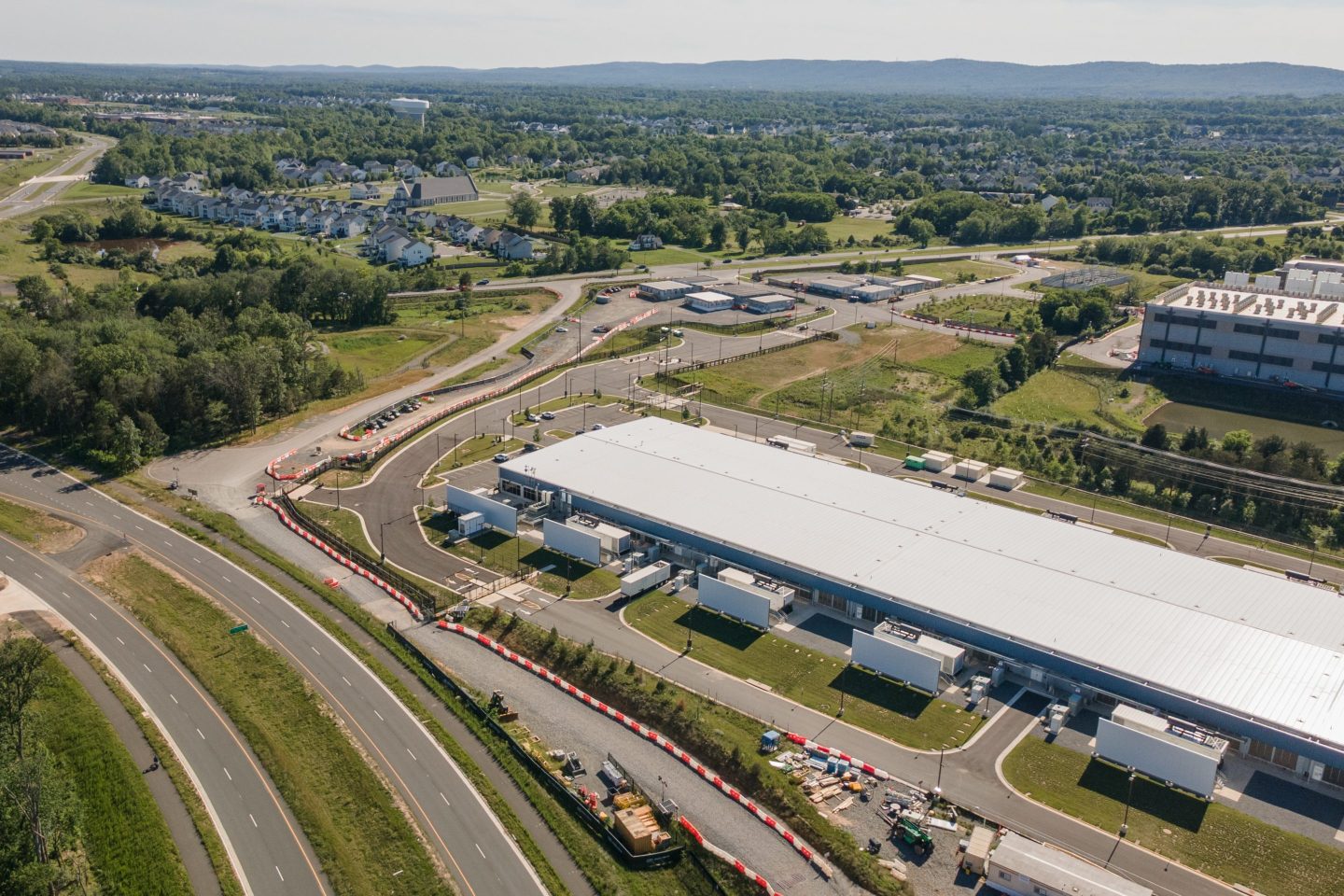
An aerial view shows a large flat building.
Data centers, like this one in Georgia, use large amounts of electricity. AP Photo/Mike Stewart

Electricity companies

Many power companies are regulated by state or local governments and are not allowed to make profits off maintaining existing service or selling electricity. Their profits come from building new power plants, new transformers and substations, and new power lines – and passing those costs along to customers, with a markup for profit.

A data center can require significant investment in power generation and transmission – a data center proposed by Google in Van Buren Township, Michigan, for example, would require “2.7 gigawatts of electricity – a massive amount of power equivalent to the demand of about 2 million homes,” according to a local news report.

So a power company is likely to be eager to capitalize on the opportunity for a new major customer and may be willing to endure some amount of public backlash.

Power companies that operate in small geographic areas are highly dependent on the success of the municipalities from which they draw their customers and in which they build their infrastructure. In these situations, they have a vested interest in local economic growth, specifically the movement to the area of companies that supply jobs and, therefore, workers. This drives them to get involved in local political decision-making by lobbying for zoning changes to enable data centers.

Larger utility companies that operate regionally or across entire states are less tied to the economic success of a specific municipality within their service area. But they are also able to target their influence at state lawmakers. For example, DTE Energy assured state lawmakers that the proposed data center in Van Buren Township would not raise customers’ power rates.

A crowd of people listen to a speaker in a public meeting room.
People packed a local meeting room in Evanston, Wyo., for a public hearing on a proposed data center. Natalie Behring/Getty Images

Community leaders

Community leaders and elected officials are often interested in the jobs that tech companies promise will come with the data centers, so they tend to support approval of permits, zoning amendments or other legal changes.

Although data centers don’t really create very many jobs, they do have the potential to contribute to local property taxes, which can appeal to small towns without many other options.

Cities and towns are always on the hunt for growth opportunities, seeking additional tax revenue. That can lead them to feel pressure to build new roads, modify their land-use ordinances and approve requests from companies wishing to build within their boundaries.

My research has found that this pressure exists even in shrinking or small cities. This pressure has increased as cities have sought to reduce taxes on residents. The solution they see to getting fewer dollars out of existing residents is to bring in more businesses, more industry and more new residents. That makes them interested in welcoming data centers.

However, not every community leader is on board with data centers. Some oppose them but feel hamstrung or powerless to stop or slow their progress, as occurred in Ypsilanti Township and in nearby Saline Township as well.

People bundled up against winter cold hold signs saying 'No data center' and 'Protect our future - no big data.'
People in Saline, Mich., hold signs opposing a data center proposed in their community. Jim West/UCG/Universal Images Group via Getty Images

Everyday people

In many communities, everyday people concerned with noise, land use, water use and power use oppose the data centers.

They are also concerned about the costs data centers may impose on utility ratepayers, taxpayers and those who must experience the environmental effects. People’s power, exercised through democratic processes such as public hearings, ordinance revisions and elections, can be overwhelmed by the tech companies and aligned groups.

But voters do have power. In June 2026, Utah voters unseated a longtime legislative leader, state Senate President Stuart Adams, who had helped get approval for a massive data center in the northwestern part of the state.

Whether a data center moves forward in a municipality ends up being a matter of how public officials sort through the motivations and sociopolitical power of all these players.

Lauren Mullenbach, Assistant Research Scientist in Environmental Justice, University of Michigan

This article is republished from The Conversation under a Creative Commons license. Read the original article.


Subscribe to Fortune Gulf Brief. Every Tuesday, this new newsletter delivers clear-eyed, authoritative intelligence on the deals, decisions, policies, and power shifts shaping one of the world’s most consequential regions, written for the people who need to act on it. Sign up here.
About the Authors
By Laura Mullenbach
See full bioRight Arrow Button Icon
By The Conversation
See full bioRight Arrow Button Icon
Add Fortune on Google for similar content.

Latest in Environment

Finance
Lorem ipsum dolor sit amet, consectetur adipiscing elit, sed do eiusmod tempor incididunt ut labore et dolore magna aliqua. Ut enim ad minim veniam
By Fortune Editors
October 20, 2025
Finance
Lorem ipsum dolor sit amet, consectetur adipiscing elit, sed do eiusmod tempor incididunt ut labore et dolore magna aliqua. Ut enim ad minim veniam
By Fortune Editors
October 20, 2025
Finance
Lorem ipsum dolor sit amet, consectetur adipiscing elit, sed do eiusmod tempor incididunt ut labore et dolore magna aliqua. Ut enim ad minim veniam
By Fortune Editors
October 20, 2025
Finance
Lorem ipsum dolor sit amet, consectetur adipiscing elit, sed do eiusmod tempor incididunt ut labore et dolore magna aliqua. Ut enim ad minim veniam
By Fortune Editors
October 20, 2025
Finance
Lorem ipsum dolor sit amet, consectetur adipiscing elit, sed do eiusmod tempor incididunt ut labore et dolore magna aliqua. Ut enim ad minim veniam
By Fortune Editors
October 20, 2025
Finance
Lorem ipsum dolor sit amet, consectetur adipiscing elit, sed do eiusmod tempor incididunt ut labore et dolore magna aliqua. Ut enim ad minim veniam
By Fortune Editors
October 20, 2025

Most Popular

Finance
Lorem ipsum dolor sit amet, consectetur adipiscing elit, sed do eiusmod tempor incididunt ut labore et dolore magna aliqua. Ut enim ad minim veniam
By Fortune Editors
October 20, 2025
Finance
Lorem ipsum dolor sit amet, consectetur adipiscing elit, sed do eiusmod tempor incididunt ut labore et dolore magna aliqua. Ut enim ad minim veniam
By Fortune Editors
October 20, 2025
Finance
Lorem ipsum dolor sit amet, consectetur adipiscing elit, sed do eiusmod tempor incididunt ut labore et dolore magna aliqua. Ut enim ad minim veniam
By Fortune Editors
October 20, 2025
Finance
Lorem ipsum dolor sit amet, consectetur adipiscing elit, sed do eiusmod tempor incididunt ut labore et dolore magna aliqua. Ut enim ad minim veniam
By Fortune Editors
October 20, 2025
Finance
Lorem ipsum dolor sit amet, consectetur adipiscing elit, sed do eiusmod tempor incididunt ut labore et dolore magna aliqua. Ut enim ad minim veniam
By Fortune Editors
October 20, 2025
Finance
Lorem ipsum dolor sit amet, consectetur adipiscing elit, sed do eiusmod tempor incididunt ut labore et dolore magna aliqua. Ut enim ad minim veniam
By Fortune Editors
October 20, 2025
Fortune Secondary Logo
Rankings
  • 100 Best Companies
  • Fortune 500
  • Global 500
  • Fortune 500 Europe
  • Most Powerful Women
  • World's Most Admired Companies
  • See All Rankings
  • Lists Calendar
Sections
  • Finance
  • Fortune Crypto
  • Features
  • Leadership
  • Health
  • Commentary
  • Success
  • Retail
  • Mpw
  • Tech
  • Lifestyle
  • CEO Initiative
  • Asia
  • Politics
  • Conferences
  • Europe
  • Newsletters
  • Personal Finance
  • Environment
  • Magazine
  • Education
Customer Support
  • Frequently Asked Questions
  • Customer Service Portal
  • Privacy Policy
  • Terms Of Use
  • Single Issues For Purchase
  • International Print
Commercial Services
  • Advertising
  • Fortune Brand Studio
  • Fortune Analytics
  • Fortune Conferences
  • Business Development
  • Group Subscriptions
About Us
  • About Us
  • Press Center
  • Work At Fortune
  • Terms And Conditions
  • Site Map
  • About Us
  • Press Center
  • Work At Fortune
  • Terms And Conditions
  • Site Map
  • Facebook icon
  • Twitter icon
  • LinkedIn icon
  • Instagram icon
  • Pinterest icon

Latest in Environment

utah
EnvironmentData centers
Americans hate AI so much that politicians are starting to lose their jobs over it
By Laura Mullenbach and The ConversationJuly 14, 2026
1 hour ago
ph
North AmericaDEI
How Pete Hegseth’s DEI order just put Scouting America’s future at stake
By Seth T. Kannarr, Derek H. Alderman and The ConversationJuly 13, 2026
13 hours ago
Trinidad and Tobago signs deals with U.S. companies for data centers, despite history of chronic water shortages and intermittent supply
AIData centers
Trinidad and Tobago signs deals with U.S. companies for data centers, despite history of chronic water shortages and intermittent supply
By Anselm Gibbs and The Associated PressJuly 12, 2026
2 days ago
A row of people sit in a zoning meeting, many looking down or around the room.
EnvironmentData centers
Wyoming officials say Meta’s 715,000-square-foot data center is responsible for contaminating its water system with a rare bacterium
By Sasha RogelbergJuly 10, 2026
4 days ago
Werner Vogels, CTO, Amazon on stage.
AIAmazon
Companies are shifting toward cheaper open‑source AI models to rein in costs, Amazon CTO says
By Beatrice NolanJuly 10, 2026
4 days ago
Microsoft’s emissions surged 25% in 2025 during data center boom
EnvironmentMicrosoft
Microsoft’s emissions surged 25% in 2025 during data center boom
By Matt Day and BloombergJuly 9, 2026
5 days ago

Most Popular

The U.S. spent $30 billion to ditch textbooks for laptops and tablets: The result is the first generation less cognitively capable than their parents
Innovation
The U.S. spent $30 billion to ditch textbooks for laptops and tablets: The result is the first generation less cognitively capable than their parents
By Sasha RogelbergJuly 12, 2026
2 days ago
Current price of oil as of July 13, 2026
Personal Finance
Current price of oil as of July 13, 2026
By Joseph HostetlerJuly 13, 2026
22 hours ago
Current price of silver as of Monday, July 13, 2026
Personal Finance
Current price of silver as of Monday, July 13, 2026
By Joseph HostetlerJuly 13, 2026
22 hours ago
Trump embraces Australian retirement system backed by Larry Fink
Personal Finance
Trump embraces Australian retirement system backed by Larry Fink
By Brianna Sosa and BloombergJuly 12, 2026
1 day ago
How Pete Hegseth's DEI order just put Scouting America's future at stake
North America
How Pete Hegseth's DEI order just put Scouting America's future at stake
By Seth T. Kannarr, Derek H. Alderman and The ConversationJuly 13, 2026
13 hours ago
The U.S. and Iran can't agree on fully reopening the Strait of Hormuz. The solution could be straight out of the Old Testament
Middle East
The U.S. and Iran can't agree on fully reopening the Strait of Hormuz. The solution could be straight out of the Old Testament
By Jason MaJuly 11, 2026
2 days ago

© 2026 Fortune Media IP Limited. All Rights Reserved. Use of this site constitutes acceptance of our Terms of Use and Privacy Policy | CA Notice at Collection and Privacy Notice | Do Not Sell/Share My Personal Information
FORTUNE is a trademark of Fortune Media IP Limited, registered in the U.S. and other countries. FORTUNE may receive compensation for some links to products and services on this website. Offers may be subject to change without notice.