• Home
  • Latest
  • Fortune 500
  • Finance
  • Tech
  • Leadership
  • Lifestyle
  • Rankings
  • Multimedia

Trendingnow

1

26 Meta employees accuse Mark Zuckerberg of using AI to target 8,000 layoffs against workers on medical, parental or family leave

2

FedEx CEO says we are in the middle of the biggest supply chain shift he’s seen in 35 years: ‘We are the referendum’

3

He sold his last company to Palantir. Now he's betting $32 million that robots can fix construction's labor crisis

1

26 Meta employees accuse Mark Zuckerberg of using AI to target 8,000 layoffs against workers on medical, parental or family leave

2

FedEx CEO says we are in the middle of the biggest supply chain shift he’s seen in 35 years: ‘We are the referendum’

3

He sold his last company to Palantir. Now he's betting $32 million that robots can fix construction's labor crisis
CommentaryParenting

New School economist: Trump Accounts will widen America’s wealth gaps

By
Darrick Hamilton
Darrick Hamilton
Down Arrow Button Icon
By
Darrick Hamilton
Darrick Hamilton
Down Arrow Button Icon
July 16, 2026, 6:30 AM ET
Darrick Hamilton is a university professor, Henry Cohen Professor of Economics and Urban Policy, and founding director of the Institute on Race, Power and Political Economy at The New School.

d
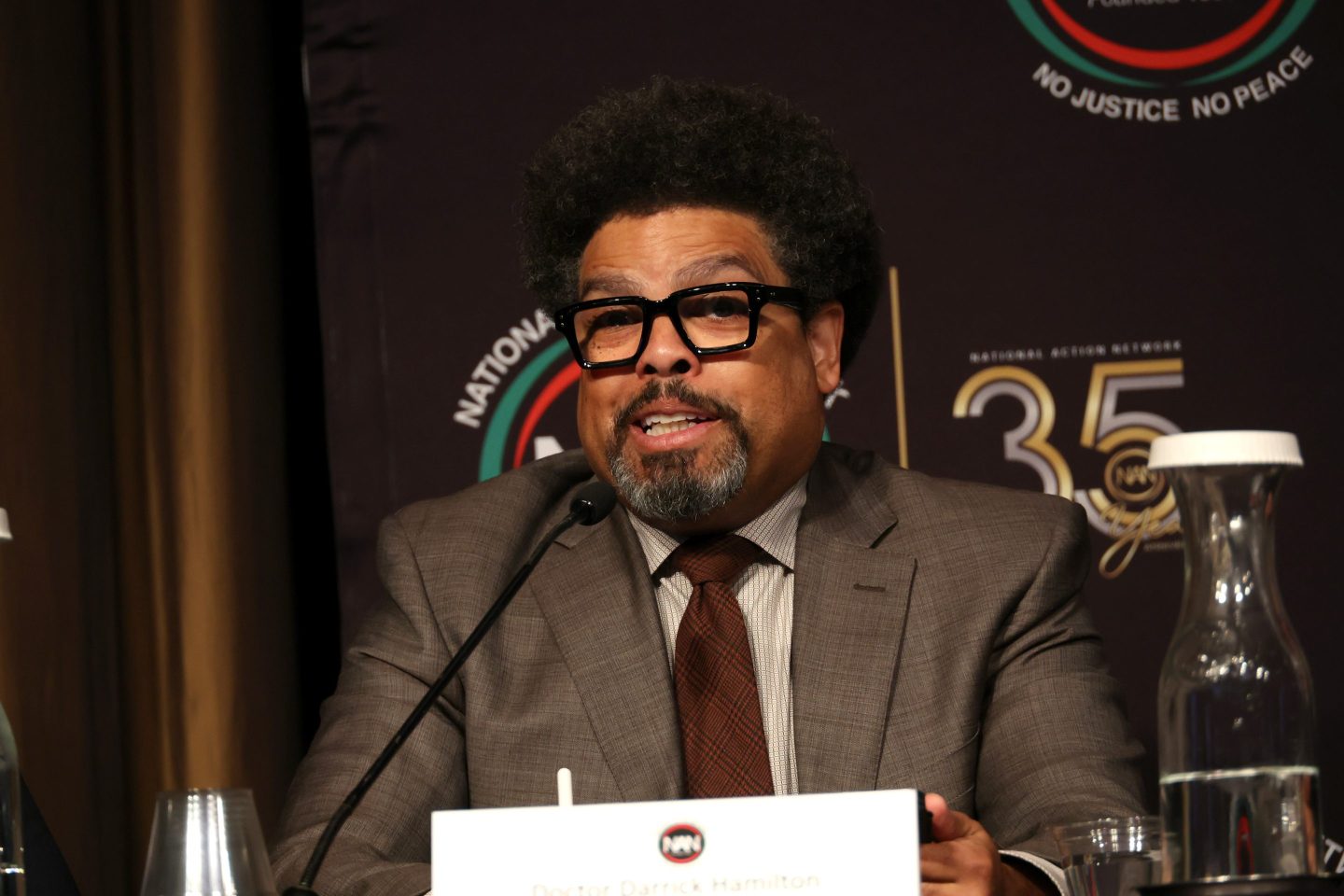
Darrick Hamilton speaks during The National Action Network Convention 2026 on April 10, 2026 in New York City. Johnny Nunez/WireImage
Add Fortune on Google for similar content.

On July 4, the federal government launched what it described as one of the nation’s most ambitious asset-building initiatives for children in decades. Under this new tax-based savings program, every child born in the United States between January 1, 2026, and December 31, 2028, receives a $1,000 investment account branded as Trump Accounts.

Recommended Video

The premise is straightforward: give every child an investment account, let compound returns do their work, and build wealth over time.

But whether these accounts ultimately narrow America’s wealth gap depends less on the initial $1,000 deposit than on the financial architecture that follows.

New research from the Institute on Race, Power and Political Economy at The New School suggests that Trump Accounts are unlikely to reduce America’s wealth gap. Based on what we already know about how tax-preferred savings vehicles operate, they may actually widen it.

That may sound counterintuitive. How can a program that gives every child the same $1,000 seed increase inequality? The answer is that the government deposit is only the starting point. What matters most is everything that comes after.

Families, employers, and philanthropies can contribute up to $5,000 annually until a child turns 18, with investments growing tax-free. Over nearly two decades, those additional contributions—not the initial government deposit—will largely determine whether a young adult reaches adulthood with a few thousand dollars or tens of thousands.

This is not a new question. For nearly three decades, the United States has tested a remarkably similar model through 529 college savings plans.

To better understand how Trump Accounts are likely to perform, we analyzed 15 years of data on 529 college savings plans using the Survey of Consumer Finances. Like Trump Accounts, 529 plans use tax incentives to encourage long-term investment in children’s futures.

The results are striking. Among lower-income families with young children, fewer than one percent own a 529 account. Nearly three in ten of the highest-income families do. Almost all of the money held in 529 accounts belongs to higher-income families, and more than three-quarters belongs to the wealthiest 10 percent alone.

As Americans struggle with the rising costs of housing, food, child care, and health care, this policy does little to address today’s affordability crisis. The challenge is not a lack of financial discipline; it is a lack of financial capacity. A $1,000 seed pales in comparison to the ability to contribute up to $5,000 annually through a tax-preferred account. Instead, our tax code remains upside down: it provides the largest incentives to families that already have wealth to invest.

The lesson is straightforward. These investment accounts are financial multipliers. They do not create capital on their own—they compound the capital families already have.

That is not a criticism of families who contribute. It is simply how compound investing—and a tax code that subsidizes it—works.

A household able to invest several thousand dollars each year for 18 years will accumulate dramatically more than one struggling to pay rent, buy groceries, or cover child care. Equal access to an investment vehicle does not produce equal capacity to build assets.

Our research team also modeled the likely trajectory of Trump Accounts using observed contribution patterns from 529 plans. Without substantial outside contributions, the typical 530A account seeded with $1,000 is projected to be worth about $4,000 by the time a child reaches adulthood.

Transformative? Unlikely. Helpful? Perhaps, but also unlikely. Benefit are limited if the program contributes to higher asset prices or if relatively modest account balances push recipients over means-tested asset thresholds that reduce eligibility for housing assistance, food assistance, child care subsidies, or Medicaid. Those policy design questions deserve careful consideration.

More important is what happens across the income distribution. If families contribute at rates similar to those observed in 529 plans, children in the highest-income households are projected to accumulate dramatically larger account balances than children in the lowest-income households.

In other words, the design is likely to reproduce—and amplify—the same dynamic observed over decades of experience with 529 plans and the broader tax code: households with the greatest financial capacity benefit the most.

That reflects a broader truth about wealth in America. Families born with assets can invest. Families without assets often cannot. That is not a question of financial discipline. It is a question of financial capacity. No amount of tax-preferred saving can overcome the simple reality that you cannot invest money you do not have.

There is a better approach. Baby Bonds are publicly funded investment accounts that work differently. Every child receives an account at birth, but unlike Trump Accounts, the public investment is progressive: children born into families with fewer assets receive larger endowments, while those born into wealthier households receive less. The funds are professionally invested over time so that every child—not simply those born into families with the greatest financial capacity—can begin adulthood with meaningful capital to build wealth.

Research by public health scholar Naomi Zewde projects that a well-funded Baby Bonds program could virtually eliminate the racial wealth gap among participating cohorts within roughly a generation and a half while expanding wealth more broadly.

Trump Accounts deserve credit for recognizing an important truth: assets matter. But if decades of evidence tell us that contribution-based investment accounts primarily reward families already positioned to contribute, simply extending that tax-preferred structure is unlikely to produce broadly shared wealth.

Let’s use the launch of Trump Accounts to prompt a broader conversation—not simply about who has an investment account, but about how capital is created and distributed in the first place.

Wealth building begins with wealth itself. A more democratic vision of economic opportunity begins by ensuring that every child enters adulthood with a meaningful capital foundation from which to build wealth, security, and opportunity.

Baby Bonds belong to a long American tradition of using public investment to expand asset ownership—from the Homestead Act to the G.I. Bill. Those policies succeeded not because they created tax advantages, but because they provided meaningful capital. Yet both were implemented in ways that excluded many Americans. The Homestead Act coincided with the dispossession of Native peoples, while the G.I. Bill was administered within a Jim Crow system that denied many Black veterans equal access to its benefits. Baby Bonds are designed differently: to extend the opportunity to build wealth to every child, regardless of race or background.

The opinions expressed in Fortune.com commentary pieces are solely the views of their authors and do not necessarily reflect the opinions and beliefs of Fortune.

Darrick Hamilton is a university professor, Henry Cohen Professor of Economics and Urban Policy, and founding director of the Institute on Race, Power and Political Economy at The New School.


About the Author
By Darrick Hamilton
See full bioRight Arrow Button Icon
Add Fortune on Google for similar content.

Latest in Commentary

Finance
Lorem ipsum dolor sit amet, consectetur adipiscing elit, sed do eiusmod tempor incididunt ut labore et dolore magna aliqua. Ut enim ad minim veniam
By Fortune Editors
October 20, 2025
Finance
Lorem ipsum dolor sit amet, consectetur adipiscing elit, sed do eiusmod tempor incididunt ut labore et dolore magna aliqua. Ut enim ad minim veniam
By Fortune Editors
October 20, 2025
Finance
Lorem ipsum dolor sit amet, consectetur adipiscing elit, sed do eiusmod tempor incididunt ut labore et dolore magna aliqua. Ut enim ad minim veniam
By Fortune Editors
October 20, 2025
Finance
Lorem ipsum dolor sit amet, consectetur adipiscing elit, sed do eiusmod tempor incididunt ut labore et dolore magna aliqua. Ut enim ad minim veniam
By Fortune Editors
October 20, 2025
Finance
Lorem ipsum dolor sit amet, consectetur adipiscing elit, sed do eiusmod tempor incididunt ut labore et dolore magna aliqua. Ut enim ad minim veniam
By Fortune Editors
October 20, 2025
Finance
Lorem ipsum dolor sit amet, consectetur adipiscing elit, sed do eiusmod tempor incididunt ut labore et dolore magna aliqua. Ut enim ad minim veniam
By Fortune Editors
October 20, 2025

Most Popular

Finance
Lorem ipsum dolor sit amet, consectetur adipiscing elit, sed do eiusmod tempor incididunt ut labore et dolore magna aliqua. Ut enim ad minim veniam
By Fortune Editors
October 20, 2025
Finance
Lorem ipsum dolor sit amet, consectetur adipiscing elit, sed do eiusmod tempor incididunt ut labore et dolore magna aliqua. Ut enim ad minim veniam
By Fortune Editors
October 20, 2025
Finance
Lorem ipsum dolor sit amet, consectetur adipiscing elit, sed do eiusmod tempor incididunt ut labore et dolore magna aliqua. Ut enim ad minim veniam
By Fortune Editors
October 20, 2025
Finance
Lorem ipsum dolor sit amet, consectetur adipiscing elit, sed do eiusmod tempor incididunt ut labore et dolore magna aliqua. Ut enim ad minim veniam
By Fortune Editors
October 20, 2025
Finance
Lorem ipsum dolor sit amet, consectetur adipiscing elit, sed do eiusmod tempor incididunt ut labore et dolore magna aliqua. Ut enim ad minim veniam
By Fortune Editors
October 20, 2025
Finance
Lorem ipsum dolor sit amet, consectetur adipiscing elit, sed do eiusmod tempor incididunt ut labore et dolore magna aliqua. Ut enim ad minim veniam
By Fortune Editors
October 20, 2025
Fortune Secondary Logo
Rankings
  • 100 Best Companies
  • Fortune 500
  • Global 500
  • Fortune 500 Europe
  • Most Powerful Women
  • World's Most Admired Companies
  • See All Rankings
  • Lists Calendar
Sections
  • Finance
  • Fortune Crypto
  • Features
  • Leadership
  • Health
  • Commentary
  • Success
  • Retail
  • Mpw
  • Tech
  • Lifestyle
  • CEO Initiative
  • Asia
  • Politics
  • Conferences
  • Europe
  • Newsletters
  • Personal Finance
  • Environment
  • Magazine
  • Education
Customer Support
  • Frequently Asked Questions
  • Customer Service Portal
  • Privacy Policy
  • Terms Of Use
  • Single Issues For Purchase
  • International Print
Commercial Services
  • Advertising
  • Fortune Brand Studio
  • Fortune Analytics
  • Fortune Conferences
  • Business Development
  • Group Subscriptions
About Us
  • About Us
  • Press Center
  • Work At Fortune
  • Terms And Conditions
  • Site Map
  • About Us
  • Press Center
  • Work At Fortune
  • Terms And Conditions
  • Site Map
  • Facebook icon
  • Twitter icon
  • LinkedIn icon
  • Instagram icon
  • Pinterest icon

Latest in Commentary

d
CommentaryParenting
New School economist: Trump Accounts will widen America’s wealth gaps
By Darrick HamiltonJuly 16, 2026
1 hour ago
cape
CommentaryWorld Cup
The legend of Cape Verde: How an island of half a million built the best team at the World Cup
By André MartinJuly 16, 2026
2 hours ago
sb
Commentarynational debt
The national debt is over 100% of GDP and most of Congress is ignoring wishes to rein it in. It’s time to amend the Constitution
By Steve H. Hanke and David M. WalkerJuly 15, 2026
21 hours ago
Is your AI really working? Why productivity isn’t the same as progress
Future of WorkBrainstorm Tech
Is your AI really working? Why productivity isn’t the same as progress
By Jamie GarverickJuly 15, 2026
23 hours ago
r
CommentaryFDA
Trust in the FDA is collapsing. It’s time to get really transparent about our food and our drugs
By Jeffrey Sonnenfeld, Megan Ranney, Sten Vermund, Patricia Greenstein and Steven TianJuly 14, 2026
2 days ago
mm
Commentaryregulation
Exclusive: Delaware proposes testing the AIC, a new legal entity for agents in a regulatory sandbox
By John Nay and Charuni Patibanda-SanchezJuly 14, 2026
2 days ago

Most Popular

26 Meta employees accuse Mark Zuckerberg of using AI to target 8,000 layoffs against workers on medical, parental or family leave
Law
26 Meta employees accuse Mark Zuckerberg of using AI to target 8,000 layoffs against workers on medical, parental or family leave
By Barbara Ortutay, Alexandra Olson and The Associated PressJuly 15, 2026
23 hours ago
FedEx CEO says we are in the middle of the biggest supply chain shift he’s seen in 35 years: ‘We are the referendum’
C-Suite
FedEx CEO says we are in the middle of the biggest supply chain shift he’s seen in 35 years: ‘We are the referendum’
By Fortune EditorsJuly 15, 2026
21 hours ago
He sold his last company to Palantir. Now he's betting $32 million that robots can fix construction's labor crisis
Innovation
He sold his last company to Palantir. Now he's betting $32 million that robots can fix construction's labor crisis
By Lily Mae LazarusJuly 15, 2026
24 hours ago
Jamie Dimon understands why people are anti-rich: 'We have, in fact, left the lower-income folks behind' and 'that's kind of annoying'
Economy
Jamie Dimon understands why people are anti-rich: 'We have, in fact, left the lower-income folks behind' and 'that's kind of annoying'
By Eleanor PringleJuly 15, 2026
1 day ago
MacKenzie Scott, Melinda French Gates, and Lauren Sánchez Bezos are rewriting the rules of billionaire giving—one quietly, one strategically, one very publicly
Newsletters
MacKenzie Scott, Melinda French Gates, and Lauren Sánchez Bezos are rewriting the rules of billionaire giving—one quietly, one strategically, one very publicly
By Sydney LakeJuly 14, 2026
2 days ago
After donating $48 billion to the Gates Foundation, Warren Buffett is quietly ending one of the biggest philanthropic relationships in history
North America
After donating $48 billion to the Gates Foundation, Warren Buffett is quietly ending one of the biggest philanthropic relationships in history
By Marco Quiroz-GutierrezJuly 14, 2026
2 days ago

© 2026 Fortune Media IP Limited. All Rights Reserved. Use of this site constitutes acceptance of our Terms of Use and Privacy Policy | CA Notice at Collection and Privacy Notice | Do Not Sell/Share My Personal Information
FORTUNE is a trademark of Fortune Media IP Limited, registered in the U.S. and other countries. FORTUNE may receive compensation for some links to products and services on this website. Offers may be subject to change without notice.