
The World Cup may have ended with Spain’s extra-time goal yesterday, but soccer fans and league presidents alike are still discussing the ramifications of what this year’s tournament may bring the sport for years to come. For starters, it was expanded to include 48 teams from the usual 32. Plus, video assistant referee (VAR) technology has been met with applause and groans alike—as has the new referee-cam. There’s also a semi-automated offside alert that shows in high-res down almost to the individual blade of grass where a player was out of position.
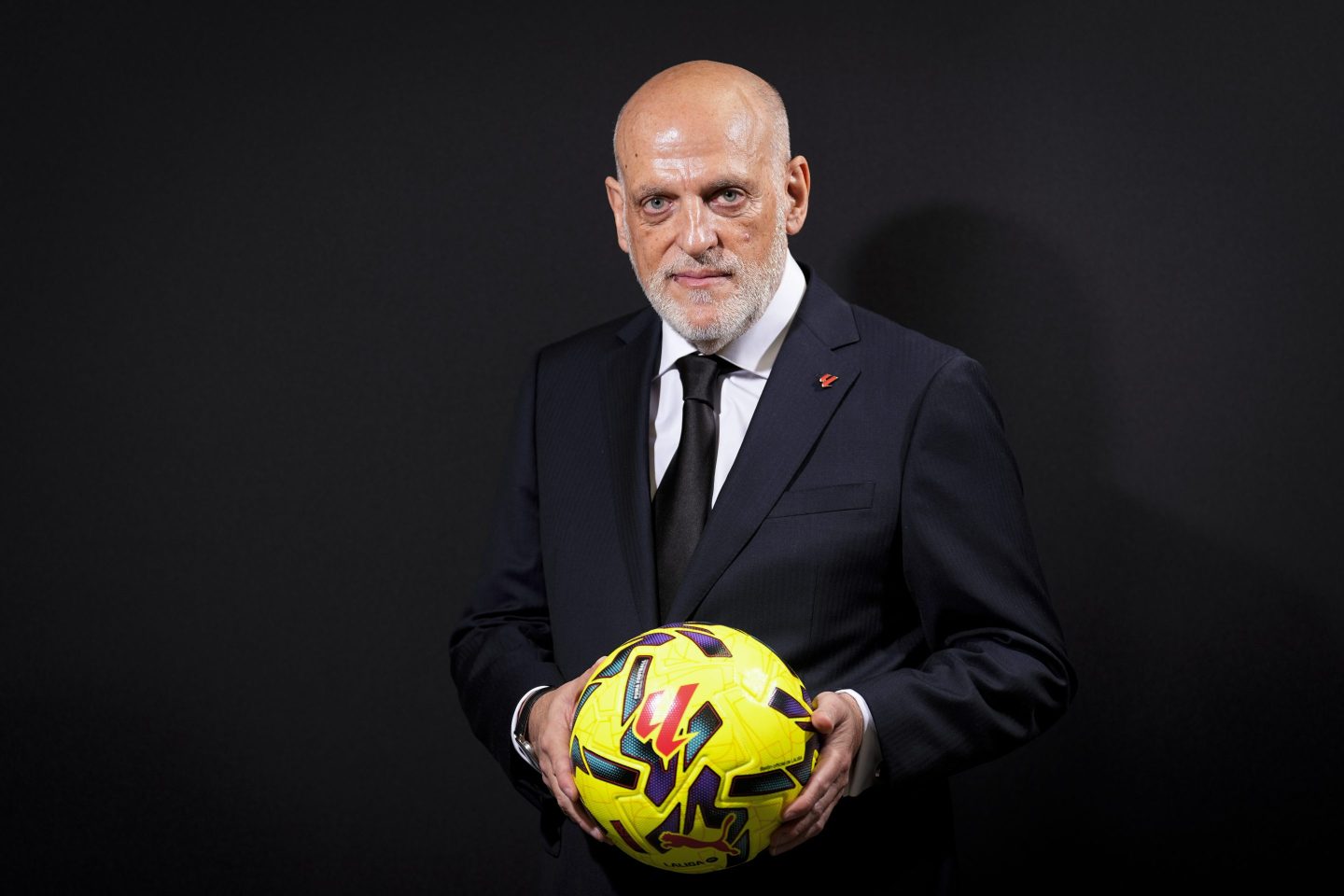
Regardless of how you feel about the expansion or the technology, it’s something soccer clubs are grappling with today. For Javier Tebas, president of the Spanish LaLiga soccer league, AI and data are improving how fans experience the sport. Pair that with anti-piracy enforcement, and the increased tech could preserve revenue, removing football’s need for more competitions.
Tebas, speaking in Spanish at the Globant Tech Summit in New York, said technology is already changing football for the better, and the clearest evidence is in how fans experience the game. Organizations that know “how to have tools, use them, and operate them correctly” can “improve an important part of our objective, which is the user experience.”
“The adoption within our organizations is, for me, key,” Tebas said, adding that getting there is the hard part. “Technology is difficult in all organizations” because it requires “the human resource structure and human body” to adopt the change.
The financial side of tech in sports
The ways tech is being implemented on the world’s stage is prominent, from the POV cameras to the new ball sensors able to detect the slightest touch of even the faintest hair. That’s gameplay, but how the fans interact with it is on a whole other level.
In fact, it’s already showing up in how LaLiga uses data. “We’re also using it for audiovisual broadcasts, to improve the experience of our users, our clients, our fans on television,” Tebas said. The data, he explained, “helps complement the narrators in visualizing what’s happening” on screen for viewers.
That new use of tech allows for a greater fan experience. “We can make fans interact more,” he said, calling it “a great moment for data.” As sports grapple with keeping fans engaged and seek new ways to implement the tech, Tebas is happy to see how it’s being deployed in LaLiga.
“At this moment, the league is transforming into probably the only sports organization acting as a solution provider.”
Tebas connected that experience-driven case for technology to a financial one on piracy. “There exists a competition where someone sells our product at a lower price or gives it for free,” he said. “It is taking away a very important capital.”
He pointed to the expanded Champions League format and the Club World Cup as the kind of struggle he’s hoping to avoid when it comes to ensuring soccer leagues reach their bottom line. Getting rid of piracy, while using AI to improve the fan experience, and football has what it needs without expansion. “We make it so we experience doing more without the need for the struggle, in this case, of football.”
The goal is “to take advantage of the disruptive time we’re going through with artificial intelligence to improve experiences for clients, fans, and users.”
This also goes to solve for Tebas’ point that “the majority of the tens of thousands of players who are professionals in the world do not participate, they do not compete” in the competitions that generate 80% of the industry’s revenue, arguing that decisions are being made without enough regard for how they affect that broader group.
Tech is making the fan experience better
Tebas’s argument is echoed by soccer player Cobi Jones, who played in three World Cups and covered this one as a broadcaster. When asked what’s changed since 1994 (the last time the U.S. played World Cup host), he said, “There was no social media. There was very little technology involved in the game.”
“Now that connection runs around the whole world, and it’s immediate,” Jones said. “I think technology allows [fans] to get real time information so they can see and have a better understanding of what’s going on on the field.”
“It gave me a sense of joy knowing that some of my friends in Austria were watching the game and experiencing it at the same time as I was here in the United States,” he said. “You’re fully connected to everybody just at the touch of the button.”
Looking back on what fans will carry away from this tournament, Jones said, “you probably won’t remember what were you doing last Tuesday in the game, but you will remember how you felt during the entirety.”