• Home
  • Latest
  • Fortune 500
  • Finance
  • Tech
  • Leadership
  • Lifestyle
  • Rankings
  • Multimedia

Trendingnow

1

Mark Cuban says he has the solution to growing income inequality, and it's to reward every employee—from CEO to janitor—with company stock

2

‘I want to die broke’: Billionaire philanthropist Denny Sanford dies after giving away $4 billion

3

'Dr. Doom' Nouriel Roubini says we're headed for universal basic income or 'some form of socialism' as AI revolutionizes work—He calls that optimistic

1

Mark Cuban says he has the solution to growing income inequality, and it's to reward every employee—from CEO to janitor—with company stock

2

‘I want to die broke’: Billionaire philanthropist Denny Sanford dies after giving away $4 billion

3

'Dr. Doom' Nouriel Roubini says we're headed for universal basic income or 'some form of socialism' as AI revolutionizes work—He calls that optimistic
Middle EastShipping

Money talks—as the Iran war continues, options for the Strait of Hormuz are coalescing around one solution— tolls

Melissa Hancock
By
Melissa Hancock
Melissa Hancock
Writer
Down Arrow Button Icon
Melissa Hancock
By
Melissa Hancock
Melissa Hancock
Writer
Down Arrow Button Icon
July 21, 2026, 6:07 AM ET
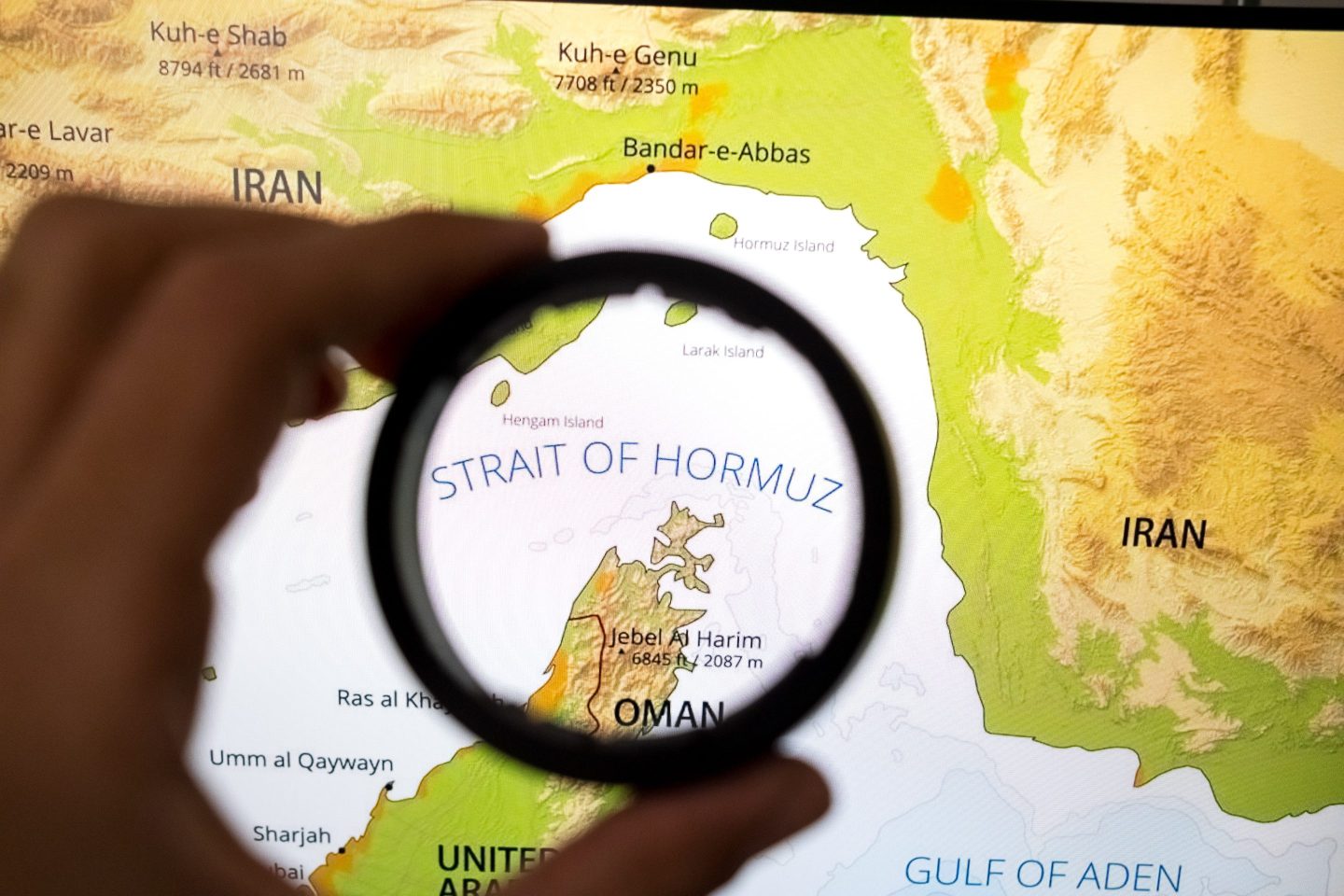
A map depicting the Strait of Hormuz
A map depicting the Strait of Hormuz NurPhoto / Contributor
Add Fortune on Google for similar content.

The Strait of Hormuz has become the central battleground of the U.S.-Iran conflict. 

Recommended Video

Prior to the outbreak of the war on 28 February, roughly 20% of global oil and LNG shipments moved through the narrow waterway—today, just a handful of ships are moving through, according to maritime intelligence firm Kpler.

The U.S. has launched nightly airstrikes against Iranian military targets since 11 July, while Iran has responded with missile and drone attacks on U.S. forces, Gulf countries, and shipping-related targets.

Kpler noted last week that: “While regional mediation efforts remain underway, commercial shipping patterns suggest military developments are now shaping operational decisions more than diplomatic progress.”

In its latest operational update on 16 July, the Joint Maritime Information Center (JMIC), counted 10 Iranian attacks on shipping since 25 June, and maintained a severe threat level for the Strait of Hormuz, meaning an attack is highly likely. 

“Recent confirmed incidents reinforce that the threat environment remains heightened and warrants extreme vigilance,” said JMIC, which works with the navies of the Combined Maritime Forces in the Middle East Region to provide security updates, threat assessments, and safe transit advice to merchant ships and global shipping companies. 

“IRGC attacks, hailing, and routing pressure continue, particularly for AIS-active vessels,” JMIC said.

On 20 July, Iran’s Islamic Revolutionary Guard Corps (IRGC) said two oil tankers had exploded and been left immobilised after attempting to cross what it described as an unsafe southern route through the Strait of Hormuz.

The IRGC allege the U.S. military had encouraged the vessels to use the passage.

Meanwhile, the IRGC said the Strait of Hormuz “will not be safe for the transit of petrochemical products, nor even a single drop of oil and gas” as long as US strikes continue. It added that it will respond with a “punitive operation”.

During a Lloyd’s List Intelligence briefing last week, Dimitris Maniatis, CEO of Athens-headquartered maritime risk management company Marisks, explained why the marked escalation in violence is leading to new challenges for shipping companies beyond higher insurance rates and contractual risk. 

Crews are becoming increasingly unwilling to sail through the strait, regardless of any assurances or incentives offered to them.

“All this resonates with crews, and right now they’re just not very happy to go through, no matter what is promised to them,” said Maniatis. 

“It’s not about money anymore, it’s not about any other higher calling, it’s purely about the fear that is governing the decision-making right now.”

In a research note published last week, Oxford Economics argued that accepting a toll system to enable regular trade through the strategic waterway could prove less costly than allowing prolonged disruption to continue.

Iran and Oman have both proposed introducing charges. While Tehran is proposing mandatory fees, Muscat is reportedly exploring a model based on the voluntary fees used in the Strait of Malacca or the transit charges levied by Türkiye on vessels transiting between the Black Sea and the Mediterranean. The fees help fund safe navigation and environmental protection services.

“It’s not about money anymore, it’s not about any other higher calling, it’s purely about the fear that is governing the decision-making right now”

Dimitris Maniatis, CEO of Marisks

Both countries would be likely to frame them as service fees to conform to international law, according to the global economic advisory firm. 

The Very Large Crude Carriers (VLCCs) commonly seen in the Strait and built to carry up to 2 million barrels of oil, Iran’s implied $2 million per-ship charge would translate to a $1 per barrel levy. 

This equates to roughly 1.2% of Brent being priced at $86 price per barrel.

The proposed fee would markedly exceed the effective charges applied in other strategic waterways in the region, such as the Turkish Straits and the Suez Canal.

Oxford Economics calculates that, at pre-war oil shipping volumes, it could net

Iran and Oman $6.8 billion a year (1.6% of Iran and Oman’s combined 2025 GDP), compared with the $4.7bn that Egypt generated from the Suez Canal in 2025/26 (1.2% of GDP). 

Furthermore, the total windfall would be likely to be higher once fees for LNG and other non-crude shipments are included. 

Oxford Economics is not an outlier in proposing fees on the vessels exporting oil, gas, and related products.

Bourse & Bazaar Foundation, a London-based think tank focused on the Middle East published a report earlier this month in which it proposes targeting the largest oil tankers using the Gulf, including around 600 VLCCs that make multiple voyages each year. 

With oil shipments through the Gulf worth about $600 billion annually, according to the International Energy Agency, the authors argue that a modest surcharge would have little impact on carriers while ensuring that those posing the greatest environmental risk contribute to the waterway’s upkeep.

Its proposal, which would treat the Gulf as a shared regional common market, said the fees would also be collected to help fund the services that enable the safe lifting of cargoes from Gulf ports.

The report notes that major Gulf ports already charge ships for services, suggesting it would not be a significant step to establish a regional body to collect and distribute similar transit fees.

However, any rise in transit costs would be likely to incentivise regional exporters to further diversify away from the Strait, eroding the levy’s long-term revenue potential.

Saudi Arabia has already shifted a large proportion of its crude exports to its Red Sea terminal at Yanbu to reduce reliance on the Strait of Hormuz. 

Dubai-based ports and logistics giant DP World, meanwhile, is reportedly planning to develop a new port and container terminal at Fujairah on the UAE’s east coast, a move aimed at reducing Dubai’s reliance on its flagship Jebel Ali port. 

Analysts from Goldman Sachs estimated in a note last week that enough Mideast pipeline capacity will likely be added to insulate over 45% of pre-war Gulf exports by the end of next year. 

By the end of 2028, the figure could rise to more than 60%, with an “accelerated scenario” pushing it to 75%. 

Goldman put median construction time for pipeline projects in the region at 2.5 years, “with construction typically occurring more rapidly in response to supply disruptions.”
Subscribe to Fortune Gulf Brief. Every Tuesday, this new newsletter delivers clear-eyed, authoritative intelligence on the deals, decisions, policies, and power shifts shaping one of the world’s most consequential regions, written for the people who need to act on it. Sign up here.
About the Author
Melissa Hancock
By Melissa HancockWriter

Melissa Hancock is the author of Fortune Gulf Brief – Fortune's weekly newsletter, which spotlights the investment trends and business opportunities that matter across the region. Melissa has specialized in covering the region for 20 years, during which time she has worked for a range of well-known publications including AGBI, MEED, Forbes Middle East and MEES. She also served as MENA Editor for The Banker, the FT’s monthly banking magazine.

See full bioRight Arrow Button Icon
Add Fortune on Google for similar content.

Latest in Middle East

Finance
Lorem ipsum dolor sit amet, consectetur adipiscing elit, sed do eiusmod tempor incididunt ut labore et dolore magna aliqua. Ut enim ad minim veniam
By Fortune Editors
October 20, 2025
Finance
Lorem ipsum dolor sit amet, consectetur adipiscing elit, sed do eiusmod tempor incididunt ut labore et dolore magna aliqua. Ut enim ad minim veniam
By Fortune Editors
October 20, 2025
Finance
Lorem ipsum dolor sit amet, consectetur adipiscing elit, sed do eiusmod tempor incididunt ut labore et dolore magna aliqua. Ut enim ad minim veniam
By Fortune Editors
October 20, 2025
Finance
Lorem ipsum dolor sit amet, consectetur adipiscing elit, sed do eiusmod tempor incididunt ut labore et dolore magna aliqua. Ut enim ad minim veniam
By Fortune Editors
October 20, 2025
Finance
Lorem ipsum dolor sit amet, consectetur adipiscing elit, sed do eiusmod tempor incididunt ut labore et dolore magna aliqua. Ut enim ad minim veniam
By Fortune Editors
October 20, 2025
Finance
Lorem ipsum dolor sit amet, consectetur adipiscing elit, sed do eiusmod tempor incididunt ut labore et dolore magna aliqua. Ut enim ad minim veniam
By Fortune Editors
October 20, 2025

Most Popular

Finance
Lorem ipsum dolor sit amet, consectetur adipiscing elit, sed do eiusmod tempor incididunt ut labore et dolore magna aliqua. Ut enim ad minim veniam
By Fortune Editors
October 20, 2025
Finance
Lorem ipsum dolor sit amet, consectetur adipiscing elit, sed do eiusmod tempor incididunt ut labore et dolore magna aliqua. Ut enim ad minim veniam
By Fortune Editors
October 20, 2025
Finance
Lorem ipsum dolor sit amet, consectetur adipiscing elit, sed do eiusmod tempor incididunt ut labore et dolore magna aliqua. Ut enim ad minim veniam
By Fortune Editors
October 20, 2025
Finance
Lorem ipsum dolor sit amet, consectetur adipiscing elit, sed do eiusmod tempor incididunt ut labore et dolore magna aliqua. Ut enim ad minim veniam
By Fortune Editors
October 20, 2025
Finance
Lorem ipsum dolor sit amet, consectetur adipiscing elit, sed do eiusmod tempor incididunt ut labore et dolore magna aliqua. Ut enim ad minim veniam
By Fortune Editors
October 20, 2025
Finance
Lorem ipsum dolor sit amet, consectetur adipiscing elit, sed do eiusmod tempor incididunt ut labore et dolore magna aliqua. Ut enim ad minim veniam
By Fortune Editors
October 20, 2025
Fortune Secondary Logo
Rankings
  • 100 Best Companies
  • Fortune 500
  • Global 500
  • Fortune 500 Europe
  • Most Powerful Women
  • World's Most Admired Companies
  • See All Rankings
  • Lists Calendar
Sections
  • Finance
  • Fortune Crypto
  • Features
  • Leadership
  • Health
  • Commentary
  • Success
  • Retail
  • Mpw
  • Tech
  • Lifestyle
  • CEO Initiative
  • Asia
  • Politics
  • Conferences
  • Europe
  • Newsletters
  • Personal Finance
  • Environment
  • Magazine
  • Education
Customer Support
  • Frequently Asked Questions
  • Customer Service Portal
  • Privacy Policy
  • Terms Of Use
  • Single Issues For Purchase
  • International Print
Commercial Services
  • Advertising
  • Fortune Brand Studio
  • Fortune Analytics
  • Fortune Conferences
  • Business Development
  • Group Subscriptions
About Us
  • About Us
  • Press Center
  • Work At Fortune
  • Terms And Conditions
  • Site Map
  • About Us
  • Press Center
  • Work At Fortune
  • Terms And Conditions
  • Site Map
  • Facebook icon
  • Twitter icon
  • LinkedIn icon
  • Instagram icon
  • TikTok icon
  • YouTube icon

Latest in Middle East

Money talks—as the Iran war continues, options for the Strait of Hormuz are coalescing around one solution— tolls
Middle EastShipping
Money talks—as the Iran war continues, options for the Strait of Hormuz are coalescing around one solution— tolls
By Melissa HancockJuly 21, 2026
5 hours ago
Shipping transits slow to a trickle as Strait of Hormuz faces “worst-case scenario” 
NewslettersFortune Gulf Brief
Shipping transits slow to a trickle as Strait of Hormuz faces “worst-case scenario” 
By Melissa HancockJuly 21, 2026
5 hours ago
Markets brace for return to all-out war in Iran amid rising U.S. death toll, while former NATO commander warns Suez Canal could be next
Middle EastIran
Markets brace for return to all-out war in Iran amid rising U.S. death toll, while former NATO commander warns Suez Canal could be next
By Jason MaJuly 19, 2026
2 days ago
U.S. military announces the death of another service member, blaming the ‘controlled detonation’ of a downed Iranian drone in Iraq
Middle EastIran
U.S. military announces the death of another service member, blaming the ‘controlled detonation’ of a downed Iranian drone in Iraq
By Jon Gambrell, Sam Metz, Ben Finley and The Associated PressJuly 19, 2026
2 days ago
The world is looking ahead toward a post-Iran oil market that offsets most Hormuz volumes in a few years as ships reject a U.S.-backed alternate route
Middle EastOil
The world is looking ahead toward a post-Iran oil market that offsets most Hormuz volumes in a few years as ships reject a U.S.-backed alternate route
By Jason MaJuly 19, 2026
2 days ago
Iran claims U.S. hit its nuclear site — satellite images show mostly dirt. But return to all-out war is nearly inevitable
Middle EastIran
Iran claims U.S. hit its nuclear site — satellite images show mostly dirt. But return to all-out war is nearly inevitable
By Jon Gambrell, Sam Metz and The Associated PressJuly 19, 2026
2 days ago

Most Popular

Mark Cuban says he has the solution to growing income inequality, and it's to reward every employee—from CEO to janitor—with company stock
Success
Mark Cuban says he has the solution to growing income inequality, and it's to reward every employee—from CEO to janitor—with company stock
By Sasha RogelbergJuly 20, 2026
21 hours ago
‘I want to die broke’: Billionaire philanthropist Denny Sanford dies after giving away $4 billion
Success
‘I want to die broke’: Billionaire philanthropist Denny Sanford dies after giving away $4 billion
By Sydney LakeJuly 20, 2026
1 day ago
'Dr. Doom' Nouriel Roubini says we're headed for universal basic income or 'some form of socialism' as AI revolutionizes work—He calls that optimistic
AI
'Dr. Doom' Nouriel Roubini says we're headed for universal basic income or 'some form of socialism' as AI revolutionizes work—He calls that optimistic
By Jason MaJuly 18, 2026
3 days ago
Current price of silver as of Monday, July 20, 2026
Personal Finance
Current price of silver as of Monday, July 20, 2026
By Joseph HostetlerJuly 20, 2026
1 day ago
It’s not just Taco Bell lettuce and possible glass in Pillsbury rolls: Food and drink recall events reached a 6-year year-over-year high
Retail
It’s not just Taco Bell lettuce and possible glass in Pillsbury rolls: Food and drink recall events reached a 6-year year-over-year high
By Sasha RogelbergJuly 20, 2026
1 day ago
Current price of oil as of July 20, 2026
Personal Finance
Current price of oil as of July 20, 2026
By Joseph HostetlerJuly 20, 2026
1 day ago

© 2026 Fortune Media IP Limited. All Rights Reserved. Use of this site constitutes acceptance of our Terms of Use and Privacy Policy | CA Notice at Collection and Privacy Notice | Do Not Sell/Share My Personal Information
FORTUNE is a trademark of Fortune Media IP Limited, registered in the U.S. and other countries. FORTUNE may receive compensation for some links to products and services on this website. Offers may be subject to change without notice.