• Home
  • Latest
  • Fortune 500
  • Finance
  • Tech
  • Leadership
  • Lifestyle
  • Rankings
  • Multimedia

Trendingnow

1

Mark Cuban says he has the solution to growing income inequality, and it's to reward every employee—from CEO to janitor—with company stock

2

‘I want to die broke’: Billionaire philanthropist Denny Sanford dies after giving away $4 billion

3

'Dr. Doom' Nouriel Roubini says we're headed for universal basic income or 'some form of socialism' as AI revolutionizes work—He calls that optimistic

1

Mark Cuban says he has the solution to growing income inequality, and it's to reward every employee—from CEO to janitor—with company stock

2

‘I want to die broke’: Billionaire philanthropist Denny Sanford dies after giving away $4 billion

3

'Dr. Doom' Nouriel Roubini says we're headed for universal basic income or 'some form of socialism' as AI revolutionizes work—He calls that optimistic
CommentaryHuman resources

The CEO who fired HR was right. About the wrong thing.

By
KeyAnna Schmiedl
KeyAnna Schmiedl
Down Arrow Button Icon
By
KeyAnna Schmiedl
KeyAnna Schmiedl
Down Arrow Button Icon
July 21, 2026, 7:30 AM ET
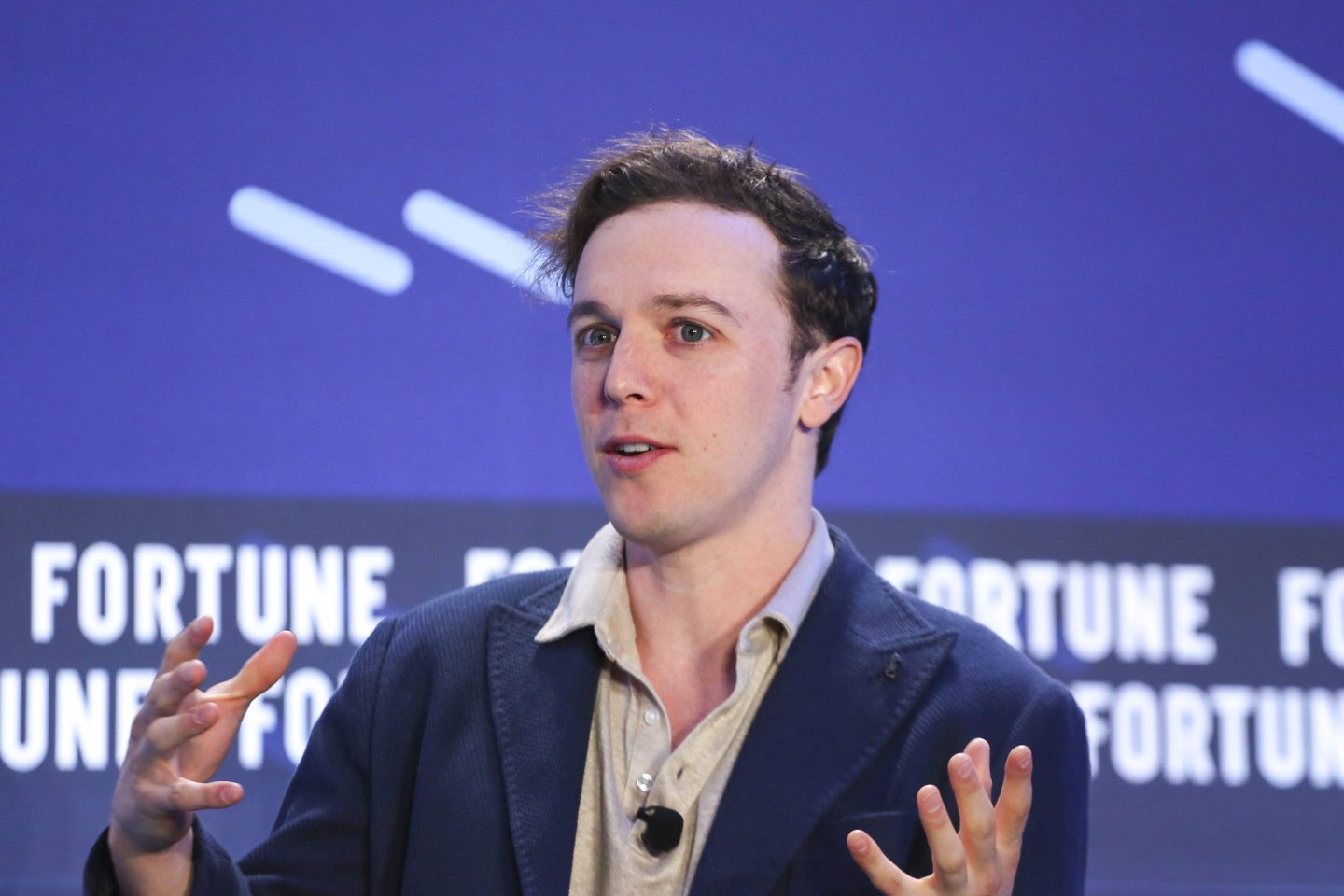
Bolt CEO Ryan Breslow
Bolt CEO Ryan Breslow says a culture of “entitlement” forced a sweeping reset—including cutting the HR team, he says, which was “creating problems that didn’t exist.”Rebecca Greenfield/Fortune
Add Fortune on Google for similar content.

Ryan Breslow, CEO of Bolt, made headlines (at Fortune and beyond) recently when he eliminated his entire people function. His explanation at the Fortune Workplace Innovation Summit: it was “creating problems that didn’t exist.”

Recommended Video

He told Fortune editorial director Kristin Stoller that his people team was manufacturing problems rather than solving real ones. And that once they were gone, those problems vanished with them.

Here’s the thing: Breslow isn’t wrong that something was broken. He’s wrong about what broke it.

I’ve spent my career building people functions, and I’ve also watched them get built to fail. What Breslow describes – reactive, process-heavy, better at documenting problems than solving them – is a real pattern. The instinct to blow it up is understandable. But the that misses the diagnosis entirely.

How people functions get built to fail

HR started as a compliance function. In most organizations, it never fully evolved past that framing. It moved from “how many complaints were filed?” to “what’s the turnover rate?” – a different flavor of the same trailing-indicator thinking. Neither question asks what the business actually needs. Both ask what already went wrong.

The problem isn’t people functions. It’s CEOs who set up people functions as compliance mechanisms, then express surprise when compliance is all they get back.

Consider what Breslow himself acknowledged: even after eliminating HR, Bolt still needed a people operations team to handle required training and serve as a resource for employees. Which is to say, he fired his HR team and then rebuilt … an HR team. He just called it something else.

On LinkedIn, he argued that “HR is the wrong energy, format, and approach” and that “People Ops empowers managers, streamlines decision making, and keeps the company moving at lightning speed.” 

I’ll give him this: the term HR is outdated. It does align more naturally with a process-driven, reporting-focused function. But People Ops isn’t a new take. Many organizations already have it as a sub-function within their people teams. What Breslow described are some of the essential strategic drivers the people function has always been best positioned to deliver. He just hasn’t gotten to the broader strategic value that real empowerment of the function can provide.

Rebranding the function doesn’t change the mandate you give it.

What only a strategic people function can do

There are two things the people function does that no manager, no matter how talented, can replicate at scale.

The first is systemic sight. Even the best manager is accountable to their team. The people function is accountable to the whole organization: the cross-sections, the interdependencies, the trailing effects of decisions made in one part of the business on talent in another. A manager losing three engineers to competitors is a local problem. A people function should have spotted the market shift that made those engineers hireable elsewhere six months before the exits happened. When the market is shifting around which skills are most valued, the people function should be the first to see it – and to make the case for investing in managers, growing internal talent, and retaining the people who could take their skills anywhere but have reasons to stay.

The second is reading leading indicators instead of trailing ones. Retention rates and engagement scores are the rearview mirror. A strategic people function is reading the road ahead: which skills are appreciating in the market, where the pipeline is thinning, what current manager investment predicts about bench strength in three years. The question isn’t “how many people have left?” It’s “what did we miss that we could have seen?”

Google’s People Operations team demonstrated exactly this. Through Project Oxygen, they used employee and performance data to challenge a core organizational assumption: that technical expertise was the primary driver of management effectiveness. The data said otherwise. Coaching, communication, and people leadership mattered more. Google redesigned manager development around those findings and measured the results. 

That’s just one illustration of what a people team does when it’s working as a strategic driver, not a compliance function.

When the people team is genuinely empowered – when it owns how the organization hires, inspires, assesses, and develops talent in direct alignment with business goals – you get a true link between behaviors and rewards, and the proactive insights that keep your business a cut above. That doesn’t emerge from a back-office function evaluated on transactional metrics. It requires a different mandate entirely.

The AI variable

The automation question deserves a direct answer. Gartner projects that by 2030, 50% of current HR activities will be automated or performed by AI agents. The Josh Bersin Company projects that HR teams could be 30–50% smaller by the end of the decade – while the proportion of strategic work rises from around 30% to as much as 75%.

AI does not make people functions obsolete. Instead, AI should be doing exactly what people functions have been stuck doing – the transactional, the administrative, the compliance-tracking – so that the humans in those roles can finally do what they were always supposed to do: think systemically about how the organization sustains itself as a community of people.

Dave Ulrich’s “three-legged stool” model – Centers of Expertise, HR Business Partners, and Shared Services – was built for its time. But it’s showing its age in an era of agentic AI. Shared Services is largely automatable. That presents an opportunity, if organizations have the clarity of leadership to capture it.

The CEOs who fire their people functions because they’re underperforming on strategic insight and then replace them with nothing are not leading that transformation. They’re reducing headcount and calling it strategy.

A different question

Whether or not companies have a people function is the wrong question. Arguing about it is a good way to avoid the harder one.

The right (and harder) question: What problem are you trying to solve, and have you given the function the mandate, the resources, and the seat at the table to actually solve it?

Because if the answer to any of those is no, you don’t have a people function problem. You have a leadership design problem. And firing the team won’t fix that.

The opinions expressed in Fortune.com commentary pieces are solely the views of their authors and do not necessarily reflect the opinions and beliefs of Fortune.


About the Author
By KeyAnna Schmiedl
See full bioRight Arrow Button Icon
Add Fortune on Google for similar content.

Latest in Commentary

Finance
Lorem ipsum dolor sit amet, consectetur adipiscing elit, sed do eiusmod tempor incididunt ut labore et dolore magna aliqua. Ut enim ad minim veniam
By Fortune Editors
October 20, 2025
Finance
Lorem ipsum dolor sit amet, consectetur adipiscing elit, sed do eiusmod tempor incididunt ut labore et dolore magna aliqua. Ut enim ad minim veniam
By Fortune Editors
October 20, 2025
Finance
Lorem ipsum dolor sit amet, consectetur adipiscing elit, sed do eiusmod tempor incididunt ut labore et dolore magna aliqua. Ut enim ad minim veniam
By Fortune Editors
October 20, 2025
Finance
Lorem ipsum dolor sit amet, consectetur adipiscing elit, sed do eiusmod tempor incididunt ut labore et dolore magna aliqua. Ut enim ad minim veniam
By Fortune Editors
October 20, 2025
Finance
Lorem ipsum dolor sit amet, consectetur adipiscing elit, sed do eiusmod tempor incididunt ut labore et dolore magna aliqua. Ut enim ad minim veniam
By Fortune Editors
October 20, 2025
Finance
Lorem ipsum dolor sit amet, consectetur adipiscing elit, sed do eiusmod tempor incididunt ut labore et dolore magna aliqua. Ut enim ad minim veniam
By Fortune Editors
October 20, 2025

Most Popular

Finance
Lorem ipsum dolor sit amet, consectetur adipiscing elit, sed do eiusmod tempor incididunt ut labore et dolore magna aliqua. Ut enim ad minim veniam
By Fortune Editors
October 20, 2025
Finance
Lorem ipsum dolor sit amet, consectetur adipiscing elit, sed do eiusmod tempor incididunt ut labore et dolore magna aliqua. Ut enim ad minim veniam
By Fortune Editors
October 20, 2025
Finance
Lorem ipsum dolor sit amet, consectetur adipiscing elit, sed do eiusmod tempor incididunt ut labore et dolore magna aliqua. Ut enim ad minim veniam
By Fortune Editors
October 20, 2025
Finance
Lorem ipsum dolor sit amet, consectetur adipiscing elit, sed do eiusmod tempor incididunt ut labore et dolore magna aliqua. Ut enim ad minim veniam
By Fortune Editors
October 20, 2025
Finance
Lorem ipsum dolor sit amet, consectetur adipiscing elit, sed do eiusmod tempor incididunt ut labore et dolore magna aliqua. Ut enim ad minim veniam
By Fortune Editors
October 20, 2025
Finance
Lorem ipsum dolor sit amet, consectetur adipiscing elit, sed do eiusmod tempor incididunt ut labore et dolore magna aliqua. Ut enim ad minim veniam
By Fortune Editors
October 20, 2025
Fortune Secondary Logo
Rankings
  • 100 Best Companies
  • Fortune 500
  • Global 500
  • Fortune 500 Europe
  • Most Powerful Women
  • World's Most Admired Companies
  • See All Rankings
  • Lists Calendar
Sections
  • Finance
  • Fortune Crypto
  • Features
  • Leadership
  • Health
  • Commentary
  • Success
  • Retail
  • Mpw
  • Tech
  • Lifestyle
  • CEO Initiative
  • Asia
  • Politics
  • Conferences
  • Europe
  • Newsletters
  • Personal Finance
  • Environment
  • Magazine
  • Education
Customer Support
  • Frequently Asked Questions
  • Customer Service Portal
  • Privacy Policy
  • Terms Of Use
  • Single Issues For Purchase
  • International Print
Commercial Services
  • Advertising
  • Fortune Brand Studio
  • Fortune Analytics
  • Fortune Conferences
  • Business Development
  • Group Subscriptions
About Us
  • About Us
  • Press Center
  • Work At Fortune
  • Terms And Conditions
  • Site Map
  • About Us
  • Press Center
  • Work At Fortune
  • Terms And Conditions
  • Site Map
  • Facebook icon
  • Twitter icon
  • LinkedIn icon
  • Instagram icon
  • TikTok icon
  • YouTube icon

KeyAnna Schmiedl is Chief Human Experience Officer at Workhuman, where she leads the company's people strategy, including talent, culture, employee experience, learning and development, total rewards, organizational design, and social impact. Previously, she held leadership roles at Mozilla and Wayfair, and has worked with organizations including Harvard University, Santander Bank, and IBIS Consulting.

A recognized leader in the future of work, KeyAnna was named to Fortune's 40 Under 40 and Business Insider's DEI Trailblazers, and received the Diversity Leader Award from Diversity Journal. She holds an MBA in Human Resource Management and an Advanced Graduate Certificate in Organizational Learning &Development from Suffolk University.


Latest in Commentary

k
Commentarypower
What I keep hearing from Fortune 500 CEOs: ‘We have no idea what we’re actually paying for power’
By Kiran BhatrajuJuly 21, 2026
6 hours ago
Bolt CEO Ryan Breslow
CommentaryHuman resources
The CEO who fired HR was right. About the wrong thing.
By KeyAnna SchmiedlJuly 21, 2026
6 hours ago
ford
Commentary250 Years of Innovation
Alliance for America’s Skilled Trades: Skilled trades shaped America’s past. Here’s how they can build America’s future
By Jim Farley, Linda Hubbard, Bayo Ogunlesi and Ruth PoratJuly 21, 2026
8 hours ago
Sumeet Agrawal is VP of Product Management (Data, AI Governance & Context Engineering for Agentic Systems) at Salesforce.
CommentaryAI agents
Salesforce VP on the leaky AI pipeline: why cheaper tokens won’t fix enterprise AI
By Sumeet AgrawalJuly 20, 2026
1 day ago
japan
CommentaryJapan
Japan’s monetary conundrum — why the yen hit a 40-year low as interest rates hit a 31-year high
By Steve H. Hanke and John GreenwoodJuly 20, 2026
1 day ago
ryan
CommentaryLeadership
I’ve interviewed 700 leaders. The ones outsourcing their thinking to AI lose their best people first
By Ryan HawkJuly 20, 2026
1 day ago

Most Popular

Mark Cuban says he has the solution to growing income inequality, and it's to reward every employee—from CEO to janitor—with company stock
Success
Mark Cuban says he has the solution to growing income inequality, and it's to reward every employee—from CEO to janitor—with company stock
By Sasha RogelbergJuly 20, 2026
1 day ago
‘I want to die broke’: Billionaire philanthropist Denny Sanford dies after giving away $4 billion
Success
‘I want to die broke’: Billionaire philanthropist Denny Sanford dies after giving away $4 billion
By Sydney LakeJuly 20, 2026
1 day ago
'Dr. Doom' Nouriel Roubini says we're headed for universal basic income or 'some form of socialism' as AI revolutionizes work—He calls that optimistic
AI
'Dr. Doom' Nouriel Roubini says we're headed for universal basic income or 'some form of socialism' as AI revolutionizes work—He calls that optimistic
By Jason MaJuly 18, 2026
3 days ago
The Treasury is walking a tightrope on U.S. debt by relying so much on short-term rates that are at the mercy of a suddenly very hawkish Fed
Economy
The Treasury is walking a tightrope on U.S. debt by relying so much on short-term rates that are at the mercy of a suddenly very hawkish Fed
By Jason MaJuly 20, 2026
1 day ago
Current price of silver as of Monday, July 20, 2026
Personal Finance
Current price of silver as of Monday, July 20, 2026
By Joseph HostetlerJuly 20, 2026
1 day ago
Current price of oil as of July 20, 2026
Personal Finance
Current price of oil as of July 20, 2026
By Joseph HostetlerJuly 20, 2026
1 day ago

© 2026 Fortune Media IP Limited. All Rights Reserved. Use of this site constitutes acceptance of our Terms of Use and Privacy Policy | CA Notice at Collection and Privacy Notice | Do Not Sell/Share My Personal Information
FORTUNE is a trademark of Fortune Media IP Limited, registered in the U.S. and other countries. FORTUNE may receive compensation for some links to products and services on this website. Offers may be subject to change without notice.