
As an executive or otherwise busy professional, your day is already optimized with a regular coffee order, a calendar in check, a workout established, and a sleep routine. However, if you’ve been feeling bloated, frequently nauseous, or find that headaches are interfering with your flow, you might want to consider an at-home food sensitivity test.
Food sensitivity tests are more complicated than they may seem. These tests can only identify foods and drink ingredients that your body reacts to; they cannot diagnose allergies or intolerances. While one of these tests may help you identify patterns and symptoms, we recommend taking your results to your primary care doctor or gastroenterologist for science-backed care and support.
Read on for our picks for the five best food sensitivity tests of the year, and what to consider if you’d like to try one.
Best Food Sensitivity Tests of 2026
- Best Food Sensitivity Test Overall: Check My Body Health Complete
- Best Finger Prick Food Sensitivity Test: Everlywell At-Home Food Sensitivity Test
- Best Value Food Sensitivity Test: MyLAB Box Food Sensitivity Comprehensive
- Best Food Sensitivity Test for IBS: YorkTest Premium Food Sensitivity Test
- Best Food Sensitivity Test for Most Ages: Quest Health Food Allergy Panel
Best Food Sensitivity Test Comparison Table
Best Food Sensitivity Test Overall: Check My Body Health Complete Food Sensitivity Test
Check My Body Health Complete Food Sensitivity Test
| Fortune score | 4/5 |
at Check My Body Health
- Our thoughts: The data is color-coded for easy interpretation
- Who it’s for: Folks who want an expanded panel of testing
- What makes it different: Includes one free month of access to the brand’s health and meal planning app
Pros
- 3-day results
- HSA/FSA approved
- 286 foods and drinks tested
Cons
- Lab information is not specific
- Expensive
- Claims about health improvements not backed by science
Our Thoughts on Check My Body Health Complete Food Sensitivity Test
Check My Body Health’s Food Sensitivity Test is our pick for the best food sensitivity test overall because it measures food-specific IgG-antibodies for 286 foods and drinks, including categories like dairy, eggs, fruit, grains, legumes, meat, seafood, seeds and nuts, veggies, spices, superfoods, fungi and yeasts, coffee, as well as sugars and sweeteners. A miscellaneous category is also tested for, including agar, cross-reactive allergens (CCDs), elderflower, food protein bonding agent (m-transglutaminase), and hops, which is unique to this test.
Our tester Sophia completed this at-home food sensitivity test, noting that it is more expensive than other options on our list–the base price is $299 (though it is often on sale), and shipping may cost around an extra $15, depending on your location.
She rated the transparency of lab credentials a 4 out of 5. The brand’s website says its lab is CLIA-certified, but does not specify the location.
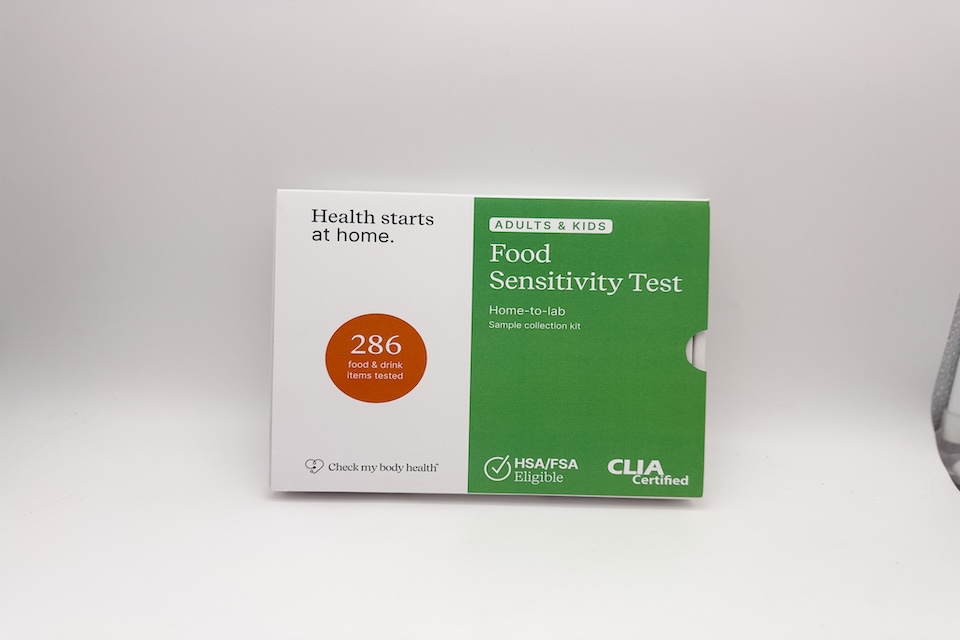
The testing kit includes alcohol wipes, lancets, gauze, a bandage, a biohazard bag, a collection card/tube, clear labeling instructions, return packaging, and a prepaid return label. The sample collection for this kit was easy for Sophia; she rated it a 5 out of 5. “I only had to prick my finger one time and then let the blood drop onto the circles on the collection card,” she said. “It was pretty easy to follow the written instructions, plus this process was similar to other kits I have tried, so I was familiar with what to do.”
The collection instructions were pretty clear; Sophia rated them a 4.5 out of 5. “Every step of registration, sample collection, and how to send off the sample was all outlined in the directions. The only part that was confusing was at the end, when I had to label a bunch of different things and match up specific labels,” she said. Sophia didn’t find this too complicated, but it was another step in the process to be figured out.
It took seven days for Sophia’s test results to come in. The data was sent via email as a downloadable PDF (no login was required), which seems to be a possible safety and privacy issue. Sophia noted that the PDF with results was 13 pages long, and details what the test was searching for, how to read results, a summary of the results, a full list of the results, advice on managing food intolerance, and next steps (for example, booking a consultation with a nutritionist or participating in meal planning programs). It is color-coded, so despite being a long document, it wasn’t too tricky to interpret.
Specs:
- Price: $299
- What’s measured: IgG antibodies
- Allergens tested: 286
- Test type: Finger prick
Best Finger Prick Food Sensitivity Test: Everlywell At-Home Food Sensitivity Test
Everlywell At-Home Food Sensitivity Test
| Fortune score | 4/5 |
at Everlywell
- Our thoughts: The detailed instructions are key
- Who it’s for: Folks who want to see what foods their body reacts to by testing at home
- What makes it different: FSA/HSA accepted for payment
Pros
- Instructions are detailed and helpful
- Results were available in 4 business days
- Free shipping
Cons
- Healthcare professional support costs more
- Doesn’t seem to offer bio sample destruction, per our tester’s experience
- More expensive than other options on our list
Our Thoughts on Everlywell At-Home Food Sensitivity Test
Everlywell is our pick for the best finger prick food sensitivity test because, with the simple prick of your finger, it tests for 96 common food sensitivities, ranging from seafood to spices. The test measures your body’s immune response to the foods tested for, though it is not a food allergy test.
Sophia tried the Everlywell Food Sensitivity Test and provided feedback along the way about the process. The test kit costs $199 as of this writing and includes free shipping and prepaid return shipping to the lab. There’s also an app that goes along with the test.
She rated the transparency of the lab’s credentials as a 4 out of 5. The brand’s site notes that its labs are CLIA and physician-authorized, but does not specify a location.
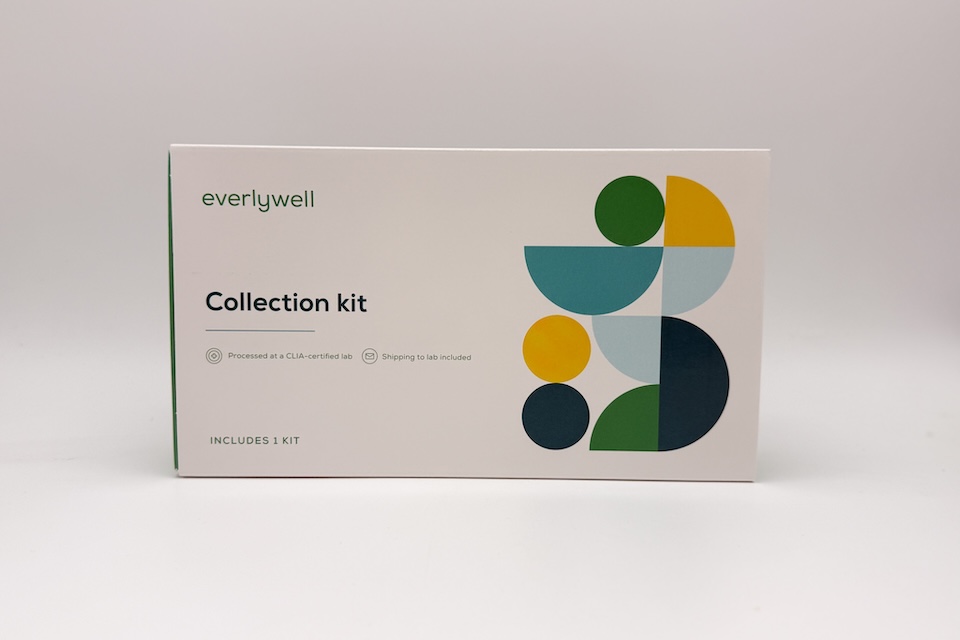
The test kit includes alcohol wipes, lancets, gauze, a bandage, a biohazard bag, a collection card/tube, clear labeling instructions, return packaging, and a prepaid return label. Sophia rated the ease of her sample collection a 5 out of 5. “I was able to complete the entire collection process in less than 10 minutes,” she said. “The actual blood sample took about a minute, but I spent 10 minutes reading through the instructions and downloading the app to register my kit.”
Our tester rated her physical comfort level a 3.5 out of 5 when taking the sample. “It didn’t feel good, but it wasn’t super painful either. It felt like getting a shot. I was surprised by how much bleeding there was, which made it easy to get my samples completed,” she said. For all of the finger prick tests on this list, this is the highest score for physical comfort. However, if you don’t feel you can do it yourself, you might want to opt for a lab test.
The instructions provided were a standout feature of this test; Sophia rated them a 5 out of 5.
“The instructions were super detailed. They walk you through what’s inside the kit, how to register the kit, how to properly collect a sample, tips for getting enough blood to squeeze out, a video on how to collect a sample, tips for how to get more blood flow such as jumping or running your hands under warm water, and then how to package up the sample to send back,” she said.
She received her results after 4 business days and was able to view them via a portal login. Sophia rated the speed of test results a 5 out of 5.
Specs:
- Price: $199
- What’s measured: IgG reactivity
- Allergens tested: 96
- Test type: Finger prick
Best Value Food Sensitivity Test: MyLAB Box Food Sensitivity Comprehensive Test
MyLAB Box Food Sensitivity Comprehensive Test
| Fortune score | 4/5 |

at MyLAB
- Our thoughts: We like that there’s a how-to video
- Who it’s for: Folks comfortable with a finger-prick test at home
- What makes it different: Includes a candida screening
Pros
- More affordable than some options on our list
- Multiple panel sizes
- At-home collection
Cons
- Currently unavailable in New York due to state regulations
- Free shipping requires $150 spend
- Lab info not specified
Our Thoughts on MyLAB Box Food Sensitivity Comprehensive Test
MyLAB Box is our pick for the best value food sensitivity test. It costs $149 for the brand’s 96 common food sensitivity test, and shipping is $15, for a total of $164. We think this is a great value, as many at-home food sensitivity test kits cost upwards of $200.
Sophia tested MyLAB Box. There’s no app to go along with the test, though labs are both CLIA- and CAP-certified. Sophia rated the labs’ transparency as a 4 out of 5, since the brand’s site says it works with “the best” laboratories, but is not more specific.
The kit includes alcohol wipes, lancets, gauze, a bandage, a biohazard bag, a collection card/tube, clear labeling instructions, return packaging, and a prepaid return label. Sophia rated the ease of her sample collection a 5 out of 5.
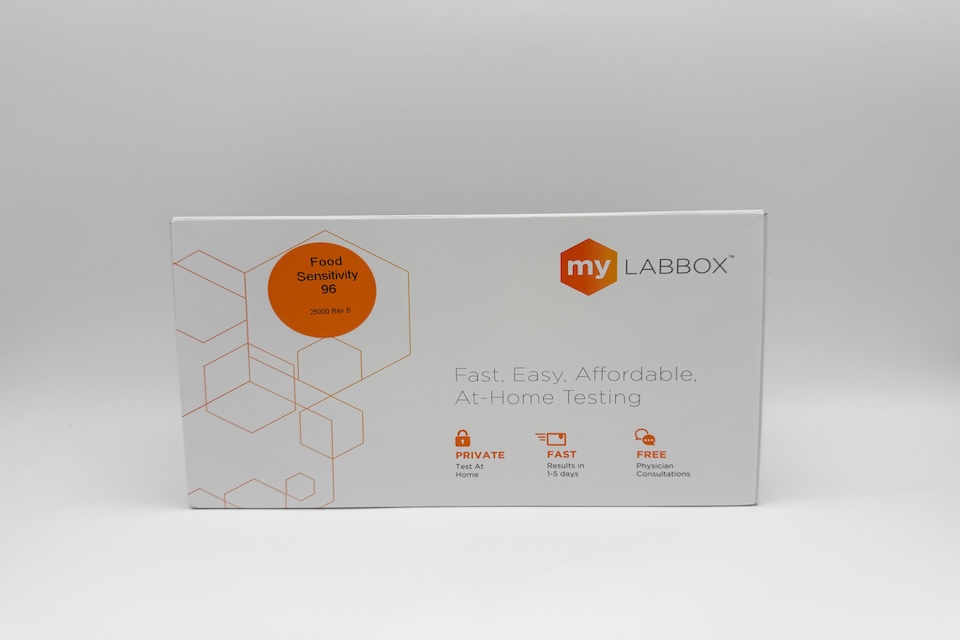
“The longest part of the whole process was thoroughly reading through the directions,” she said. “Collecting the blood was pretty quick, and the kit only required five drops. The written directions and online video were easy to understand, and nothing was confusing to me.” She rated the clarity of instructions a 5 out of 5.
Sophia rated her physical comfort level while taking her sample as a 3.5 out of 5. “It was overall very mild; it only hurt for a second or two. My finger throbbed for a little bit after, but discomfort was minimal,” she said.
It took 12 days for Sophia’s results to be made available, longer than the other options on our list. She rated the timeline’s speed a 3 out of 5. Plus, the data was hard for her to interpret.
“Finding my test results wasn’t easy. I was sent an email with a ‘view results’ button, but my account showed no results. The actual results were in a separate email, where I had to log into a different platform (Virtue) to view a password-protected PDF,” Sophia said. The test results were not color-coded, nor were they organized from most to least reactive. For Sophia, reading the results felt like reading a spreadsheet, and it was tricky to translate.
Specs:
- Price: $149
- What’s measured: IgG reactivity
- Allergens tested: 96
- Test type: Finger prick
Best Food Sensitivity Test for IBS: YorkTest Premium Food Sensitivity Test
YorkTest Premium Food Sensitivity Test
| Fortune score | 4/5 |
at Amazon
- Our thoughts: It’s great that the brand is transparent about its ISO accreditation
- Who it’s for: Folks curious about what’s causing their digestive issues
- What makes it different: York has the only ISO-accredited company on our list
Pros
- Results are color-coded
- HSA/FSA eligible
- Comes with a guidebook and food/drink diary
Cons
- Nutritionist support costs extra
- Claims about IBS and other gut health not backed by science
- Our tester had difficulty with the wand collection method
Our Thoughts on YorkTest Premium Food Sensitivity Test
YorkTest Premium Food Sensitivity Test is our pick for the best food sensitivity test for IBS. YorkTest established its lab in 1982 and has been studying food sensitivity and allergens for the last 40 years or so. The brand is ISO 13485:2016-accredited and audited annually to confirm that it offers high-quality medical devices.
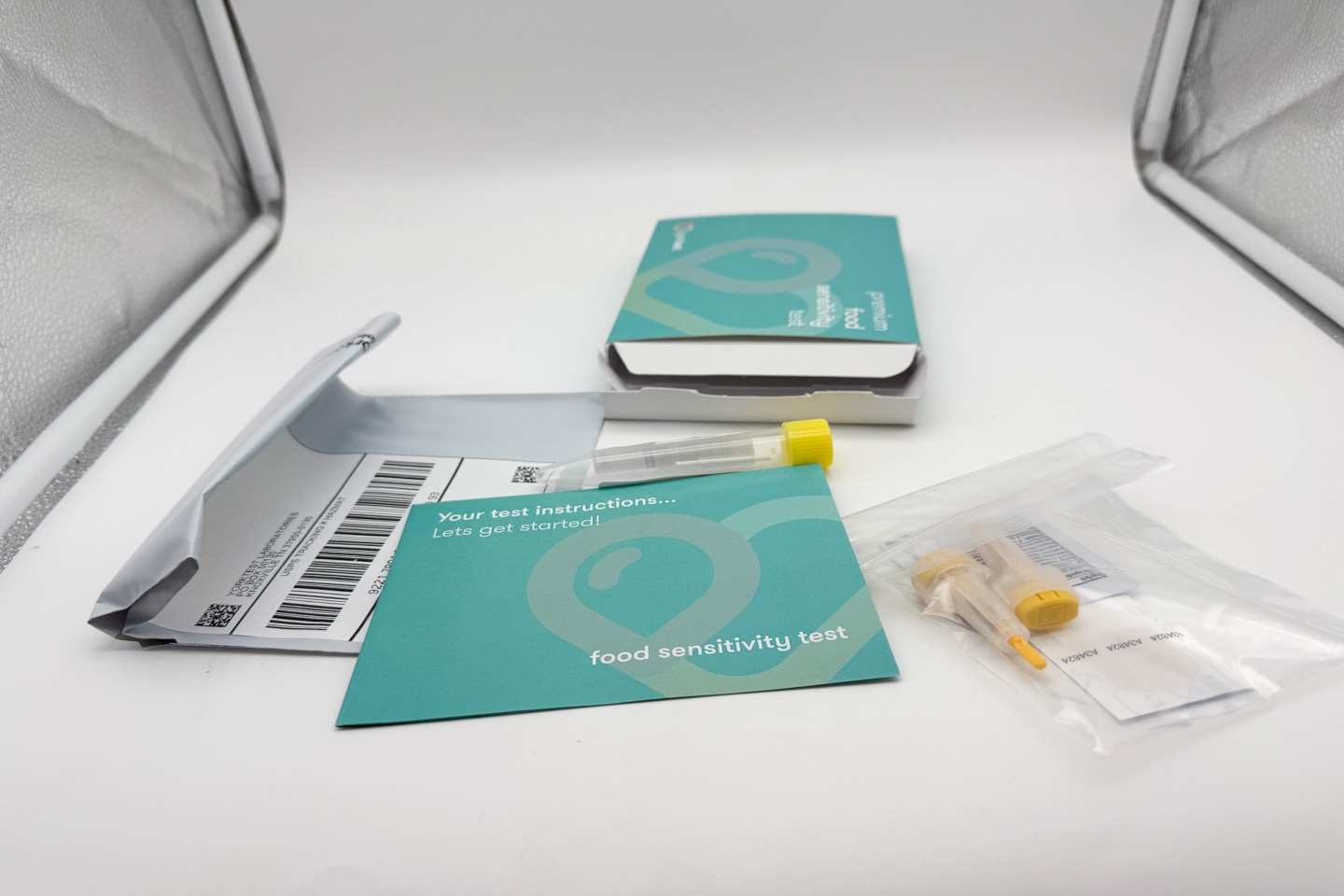
Sophia completed this food sensitivity test, rating lab transparency a 4 out of 5. YorkTest is located in the UK but has a lab in New York. The testing kit included alcohol wipes, lancets, gauze, a bandage, a biohazard bag, a collection card/tube, clear labeling instructions, return packaging, and a prepaid return label.
She rated the ease of collecting her sample a 4 out of 5. Instead of other tests on our list that Sophia tried, this kit came with a small wand to collect blood, rather than dripping blood onto a collection card.
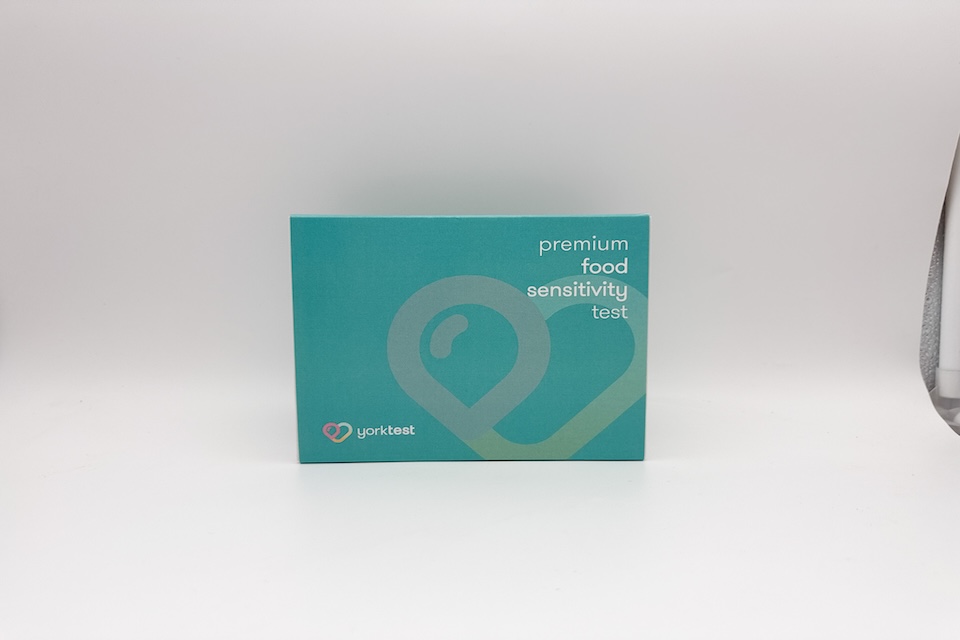
“This method was slightly harder because instead of the blood flowing freely and dropping onto the card, the wand helps apply pressure and stops the bleeding,” she said. Sophia had to use both lancets that were provided because she stopped bleeding before she could get the entire wand soaked with blood. The wand was difficult for her to hold onto, as well. It took Sophia around five minutes to collect enough blood. This process took longer than the card collection kits.
Her physical comfort level while performing the test was a 3 out of 5. “I didn’t like how I had to poke myself two times to get enough blood,” she said. The instructions were quite detailed and easy to follow; Sophia rated them a 4.5 out of 5.
Sophia’s results were sent to her eight days after she mailed out her samples. The results were easy to read and interpret.
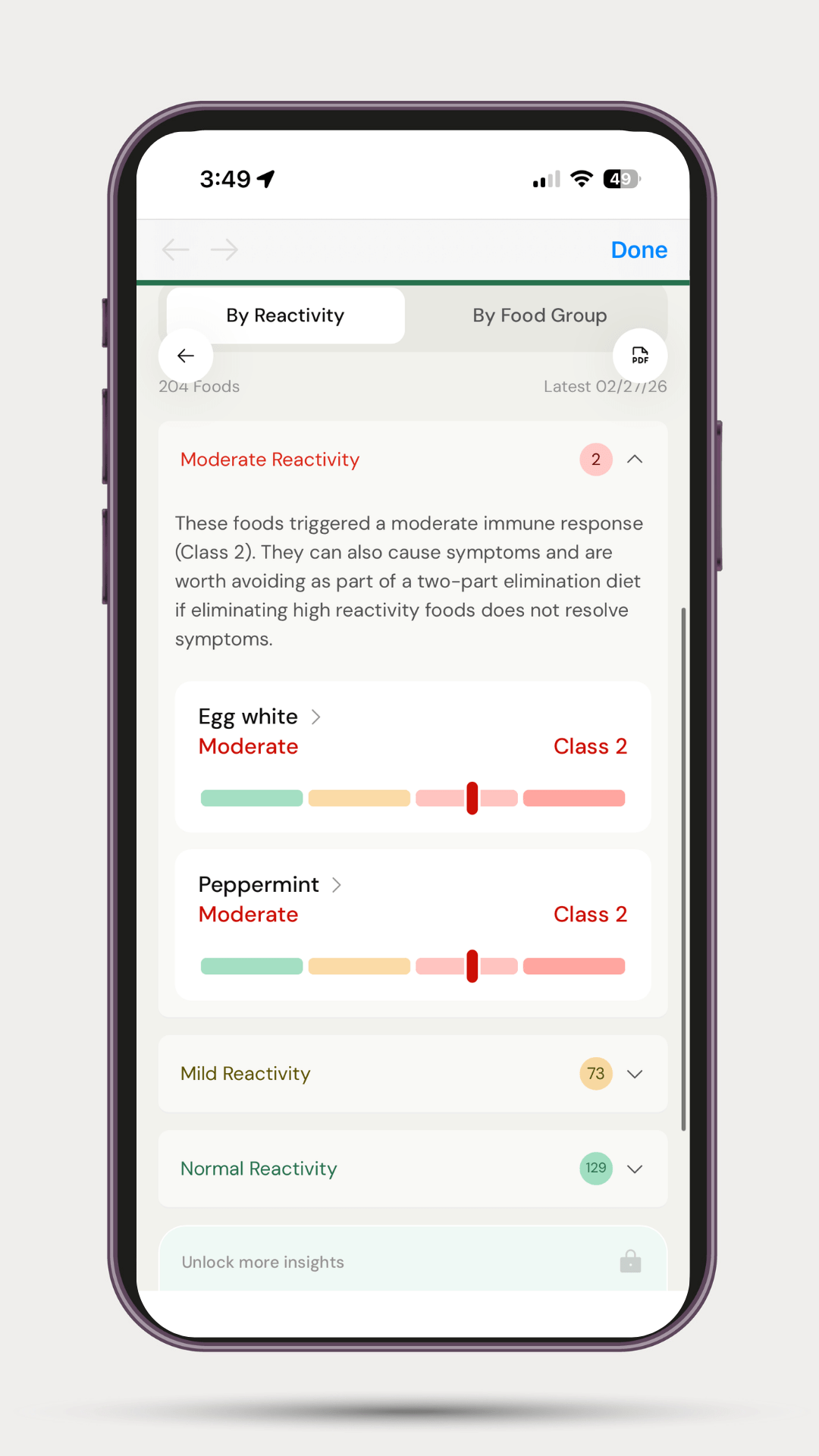
“Every single food item tested is listed and color-coded,” she noted. “The foods with the highest reactivity are listed at the top in red, followed by the borderline reactivity items in orange. Below are the normal reactivity foods in green. Next to each food is a number, with the higher the number, the higher the reactivity. I found the results intuitive to interpret without reading instructions, but in case you can’t figure it out, there is a detailed guide on how to read the results, what they mean, and next steps towards an elimination diet.”
Specs:
- Price: $199
- What’s measured: IgG reactivity
- Allergens tested: 200
- Test type: Finger prick
Best Food Sensitivity Test for Most Ages: Quest Health Food Allergy Panel
Quest Health Food
| Fortune score | 4/5 |
at Quest Health
- Our thoughts: We like that there’s a version of this test for kids 10-17
- Who it’s for: Folks who don’t want to test at home
- What makes it different: Blood will be drawn at a Quest Labs location
Pros
- Get tested at a lab rather than having to do it yourself at home
- Reflex (additional) testing available
- HSA/FSA accepted
Cons
- Panel is more limited than other options on our list
- IgE testing may result in false positives
- Clinician follow-up not included
Our Thoughts on Quest Health Food Allergy Panel
Quest Health’s Food Allergy Panel is our pick for the best food sensitivity test for most ages. It’s available for children ages 10 through 17 and for adults 18 through 100. While the panel tests only 15 common allergens, Quest offers additional testing if your results for peanut, milk, or egg antibodies are abnormal. Quest says these reflex tests will provide more information about specific protein allergies, which you can show your doctor for more specialized support.
Emily tested Quest’s Food Allergy Panel by scheduling an appointment at Quest for her blood draw. Its labs are CLIA and CAP-certified; she rated the lab’s transparency a 5 out of 5. Sample collection was easy and quick–Emily gave her experience a 5 out of 5. “I scheduled an appointment online, showed up, and was seen immediately. The whole thing took about 10 minutes,” she said.
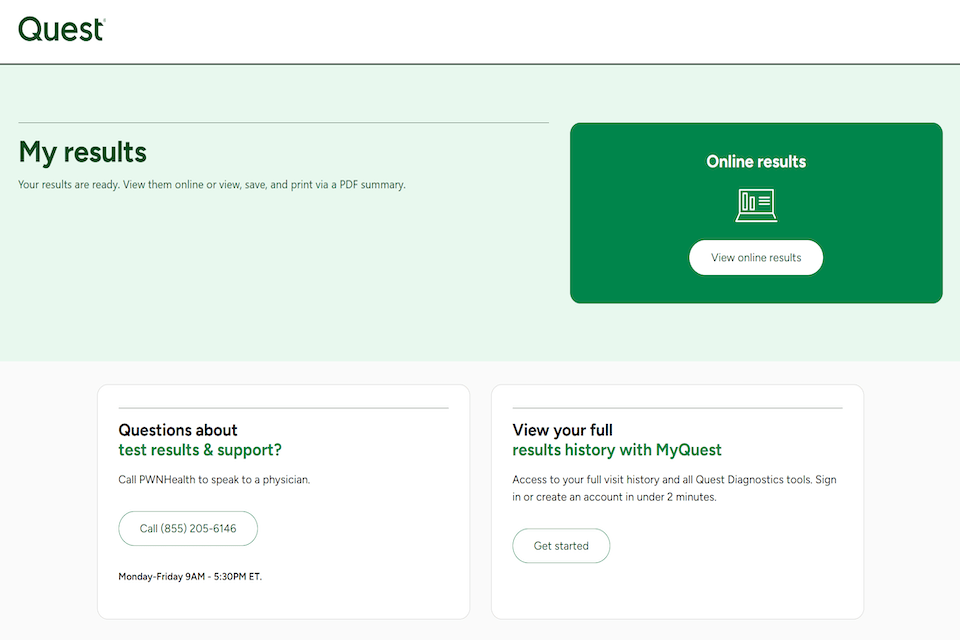
Her physical comfort level was a 5 out of 5, too. “It was nice not to draw my own blood, worry about following directions, or have to send my blood samples in the mail,” she said.
Emily’s results came in just two days, which is the fastest results turnaround on our list. She received a notification and logged in via Quest’s portal to see her results. The dashboard was very clear, showing her everything that was tested. “You can click on each specific panel for a more in-depth look,” she said. “There was also an interpretation of results included, which shares how things are scored, and that was also pretty clear.”
Specs:
- Price: $189
- What’s measured: IgE antibodies
- Allergens tested: 15
- Test type: Blood draw at a lab
How We Tested and Selected the Best Food Sensitivity Tests
We tested five different food sensitivity tests, weighing factors such as ease of reading and following instructions, sample collection, physical comfort, speed of results, and ease of interpreting results.
Included Kits
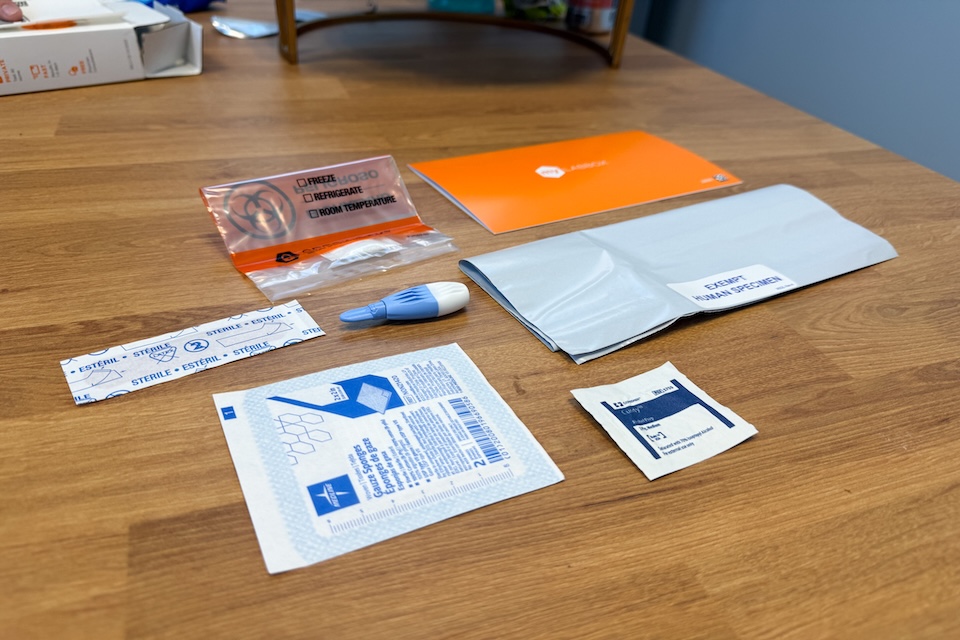
For each test, we looked at the cost of the kit, whether it has an accompanying app, and what it includes. Most kits have alcohol wipes, lancets, gauze, a bandage, a biohazard bag, a collection card/tube, clear labeling instructions, return packaging, and a prepaid return label.
Lab Certifications
We put an emphasis on the brands’ lab certifications, focusing on CLIA and CAP, and ISO accreditations.
Results Timing
We compared how long the brand said the test results would take to become available versus how long the results actually took to come in during real-life testing.
How to Find the Best Food Sensitivity Test for You
If you are considering taking a food sensitivity test, here are some areas to consider before purchasing a kit. Food sensitivity tests are not the same as a full allergen test, which is performed by medical professionals.
Your Symptoms
If you are experiencing digestive issues or have noticed symptoms such as bloating, nausea, pain, or vomiting, we recommend speaking with your doctor or other healthcare professional before buying a food sensitivity test. These tests lack solid scientific evidence supporting their use, and you could cause further upset to your body if you start an elimination diet based on the results of your tests without first consulting your doctor.
If you are considering taking a food sensitivity test, do know that many of them are blood tests. Most are at-home finger-prick tests, or you can go to a lab and have your blood drawn there. Look for a test type that you are physically comfortable with.
Sensitivities Detected
If you are reviewing different food sensitivity tests, pay close attention to the number and types of sensitivities tested for. Look for a broad panel that includes many types of foods (including nuts, seeds, herbs, and spices) and even drink ingredients such as matcha or hops.
Cost
Food sensitivity tests tend to cost between $150 and $200, sometimes more. It’s important to understand what the test does (and doesn’t do) before purchasing, so we suggest researching food sensitivities, food allergens, food intolerances, and talking about your symptoms with a doctor.
HIPAA-Compliant
Look for food sensitivity tests that are HIPAA-compliant, considering aspects such as data privacy, how the sample/your DNA is handled post-results, special authentication to log in and see your results, and more.
Benefits of Food Sensitivity Tests
While food sensitivity tests can help provide insight into your body’s reaction and sensitivities to food, they’re not diagnostic. Here are some benefits:
- Pattern identification: Test results could help you identify foods you are sensitive to, especially when used alongside a food diary.
- Starting point: You could share your food sensitivity results with your primary care doctor or gastroenterologist for further care.
- Symptom tracking: Based on the results, you could track your symptoms and foods eaten to pay attention to any connections.
How to Use a Food Sensitivity Test
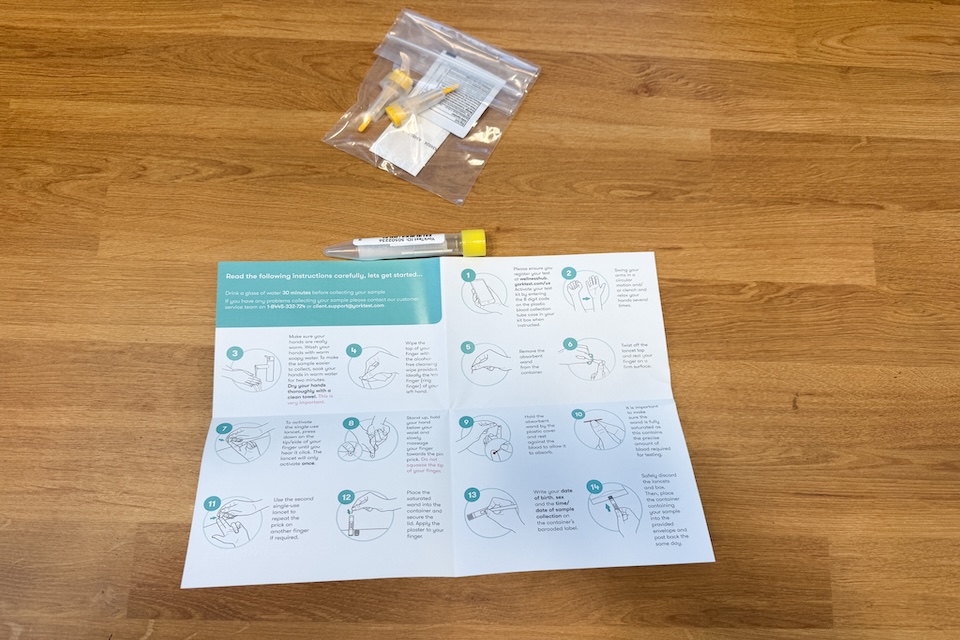
Food sensitivity tests generally have the same steps:
- Scan or plug in your code to the brand’s website, register
- Read and follow the instructions for finger prick
- Collect sample
- Bandage the sample site
- Label items as directed
- Mail to the lab using a prepaid envelope
- Wait for results
- Log into portal to see results and guidance
- Follow up with your clinician and/ start a food diary as needed
What to Avoid in Food Sensitivity Tests
Food sensitivity tests measure your body’s reaction to food or drink items, which could simply be exposure, rather than sensitivity. IgG testing is not recommended to diagnose allergies or intolerances. Here’s what to avoid in food sensitivity tests:
- Elimination diet: Removing foods from your diet can impact your overall health, making it too restrictive or even affecting the nutrients you are getting. Talk with your doctor before making any dietary changes.
- Minimizing your symptoms: If you are experiencing skin rashes, hives, swelling, or trouble breathing, go to the ER or make an appointment with your doctor. A food sensitivity test does not diagnose allergies.
- Skipping guidance: If you do choose to take a food sensitivity test, be sure to share the results with your primary care doctor, allergist, or gastroenterologist for further support.
Frequently asked questions
Do food sensitivity tests actually work?
Food sensitivity tests report IgG tolerances of foods, which are not scientifically backed or proven by any studies. We recommend meeting with an allergist to do in-office medical testing for any allergens, or meeting with a gastroenterologist to discuss any digestive symptoms you are experiencing.
Can food sensitivities be reversed?
No, food sensitivities cannot be reversed. Some allergens can be improved by allergy shots, however.
What can be mistaken for food intolerance?
Various gastrointestinal causes can be mistaken for food intolerance, such as IBS, GERD, etc.