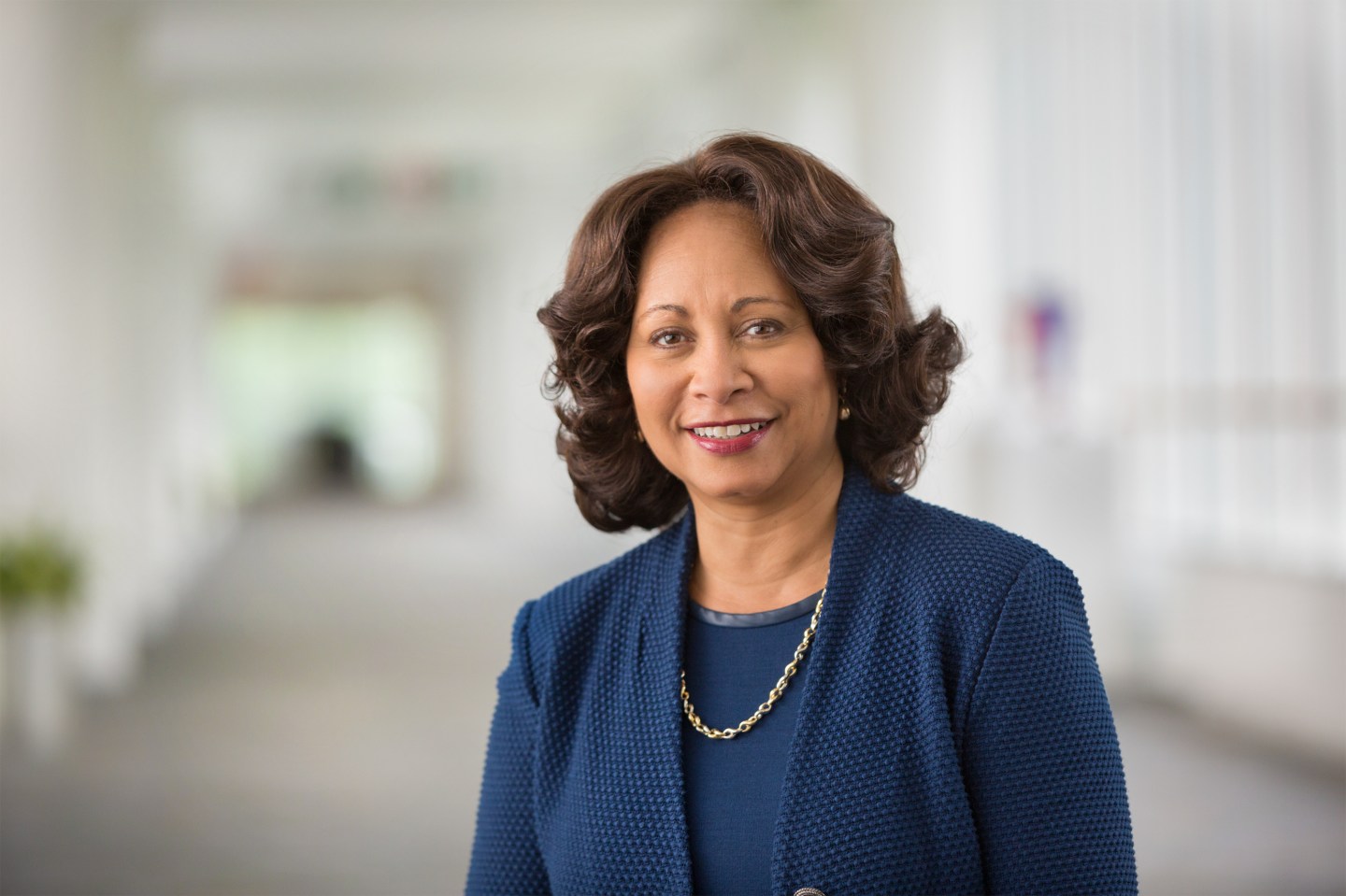
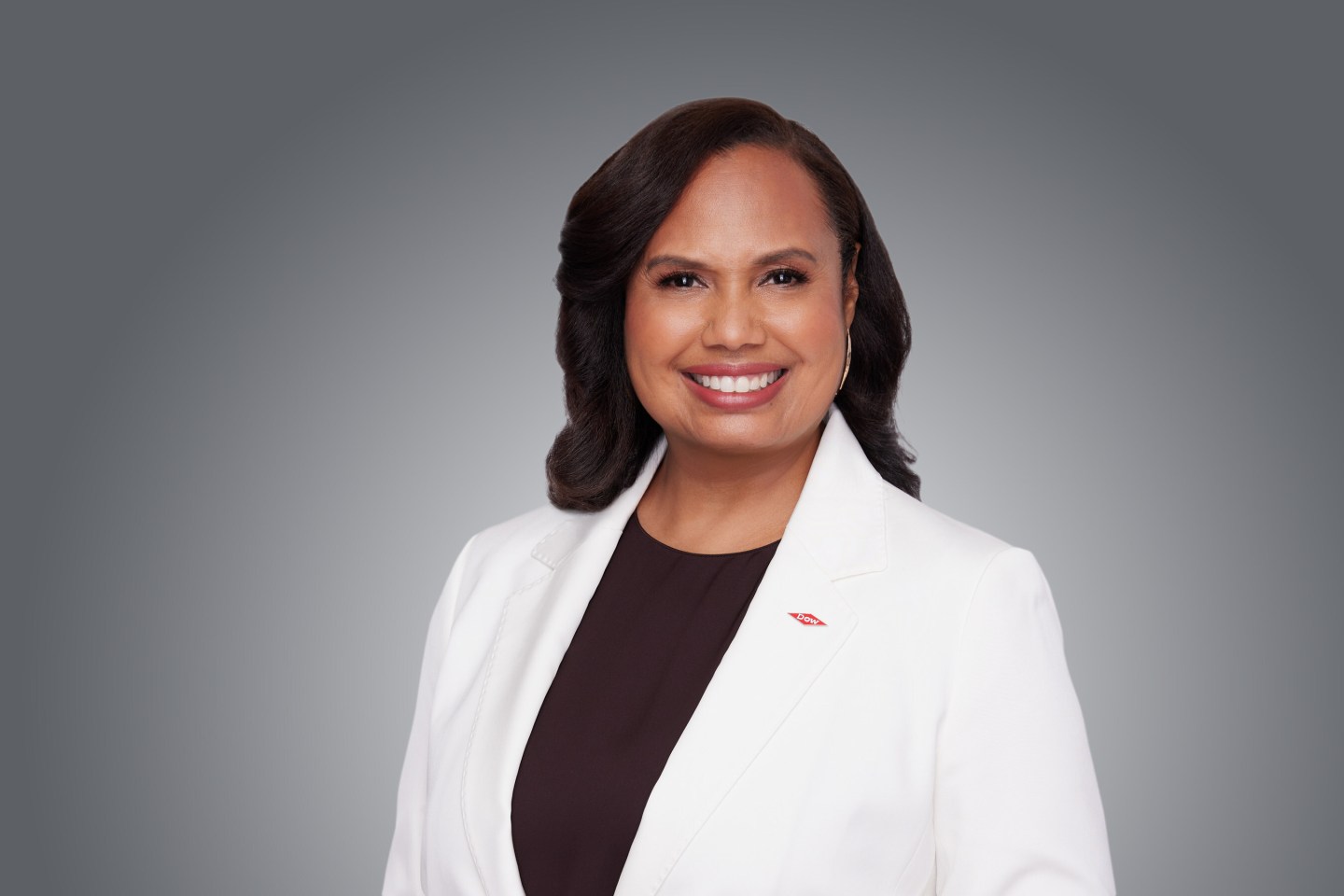
Yesterday, Dow announced it has chosen its next CEO. The materials science company (or chemical maker) sits at No. 103 on the Fortune 500, with almost $40 billion in annual revenue. Dow described its choice as the outcome of a “multi-year, thoughtful succession planning process.” And throughout that process, it decided the best candidate for this huge job was close to home.
Dow’s next CEO Karen Carter is its COO and a three-decade veteran of the company. She has deep expertise across Dow’s operations in 29 countries and with its 34,600 employees. Before she became COO, Carter was Dow’s president of packaging and specialty plastics. At $23 billion, that’s the company’s largest operating segment. In that role, she “led value growth through asset upgrades, capacity expansions and improved reliability, while advancing circular economy solutions.” She’s held leadership positions within segments including building and construction, polyethylene, engineering thermoplastics, fabricated products, IT equipment, and consumer electronics. Whew! For a stretch, she was even Dow’s chief human resources officer and chief inclusion officer. The company says she has a “uniquely holistic perspective” on Dow’s operations.
She will be one of just over 50 female CEOs running Fortune 500 companies right now. And she’ll be the third Black female CEO running a Fortune 500 company today, alongside TIAA’s Thasunda Brown Duckett and DTE’s Joi Harris. (TIAA sits just a few spots above Dow on the Fortune 500, at No. 98). Three is the all-time record for Black female CEOs serving in the Fortune 500 at once; we hit it last fall, before SAIC chief Toni Townes-Whitley exited that company.
So what to know about Carter? She’s 55, and she joined Dow in 1994 as an intern; she graduated from Howard University. Her deep expertise sets her up well to run a complex business. My colleague Diane Brady wrote a column this morning flagging one thing to watch: outgoing CEO Jim Fitterling is staying on as executive chair. He’s been CEO for eight years, during which time he transformed Dow from a commodity chemicals business to a high-growth innovator. During that time, the company has also been walloped by tariffs, geopolitical challenges, and industry overcapacity. He recently spoke to Fortune about the impact of the Iran war.
“Our direction is unchanged,” Fitterling wrote in a note after the announcement. That’s not a surprising message after an internal hire; as COO, Carter was a critical partner to Fitterling’s strategy. But ex-CEOs-turned-executive-chairs can be a tricky dynamic—as Diane wrote, it’s worth watching to make sure this doesn’t turn into a Bob Iger situation.
After all, Carter has the experience to lead on her own. “I know the people, the work, and the responsibility that comes with this role,” she wrote on LinkedIn. “As we look ahead, my focus is simple: execute with discipline, stay close to our customers, operate safely, and deliver results the right way.”
Emma Hinchliffe
emma.hinchliffe@fortune.com
The Most Powerful Women Daily newsletter is Fortune’s daily briefing for and about the women leading the business world. Subscribe here.
ALSO IN THE HEADLINES
We're getting a Martha Stewart movie. Cate Blanchett will star as the lifestyle mogul in a biopic called Good Thing. That was Stewart's famous catchphrase: "It's a good thing."
No. 1 WNBA draft pick Azzi Fudd writes an op-ed for Fortune. She shares how she used NIL reform not just to earn income while in college, but to build a career long-term. "At its best, it’s not just endorsements," she writes. "It’s brands treating athletes like future operators, founders and leaders, not just faces."
What's up with Gov. Gretchen Whitmer and President Trump? A new profile in The Atlantic examines the Michigan governor's relationship with the president. Has her political strategy changed since he dismissed her as "that woman in Michigan?"
Texas's Historically Underutilized Business Program is still kicking. Created in the 1990s, HUB helped minority- and women-owned businesses access Texas state contracts. The agency that runs the program enacted emergency rules removing women and minorities from the program, but four business owners and a trade association sued. An Austin judge just reinstated six businesses that sued the state's comptroller.
Did anyone know about allegations against Rep. Eric Swalwell before he ran for governor? One of his colleagues, Sen. Ruben Gallego, said he "had long heard rumors" that Swalwell was "flirty" with women, but let their friendship cloud his judgment. Swalwell has resigned from Congress after being accused of sexual assault by multiple women, which he denies.
ON MY RADAR
The secret to getting more women to play golf WSJ
What does Lena Dunham want to tell us? The Atlantic
Trump's disposable women The Cut
PARTING WORDS
"Some days I’ll think, 'What am I even doing? Why does any of this matter?' There are so many more important things going on that deserve energy. ... But if you can make someone happy or smile or feel distracted for a second or cheer them up, that’s all you can hope for."
—Maude Apatow, whose directorial debut Poetic License (starring her mother, Leslie Mann) comes out later this year