After closing, a San Francisco flower market isn’t exactly idyllic.
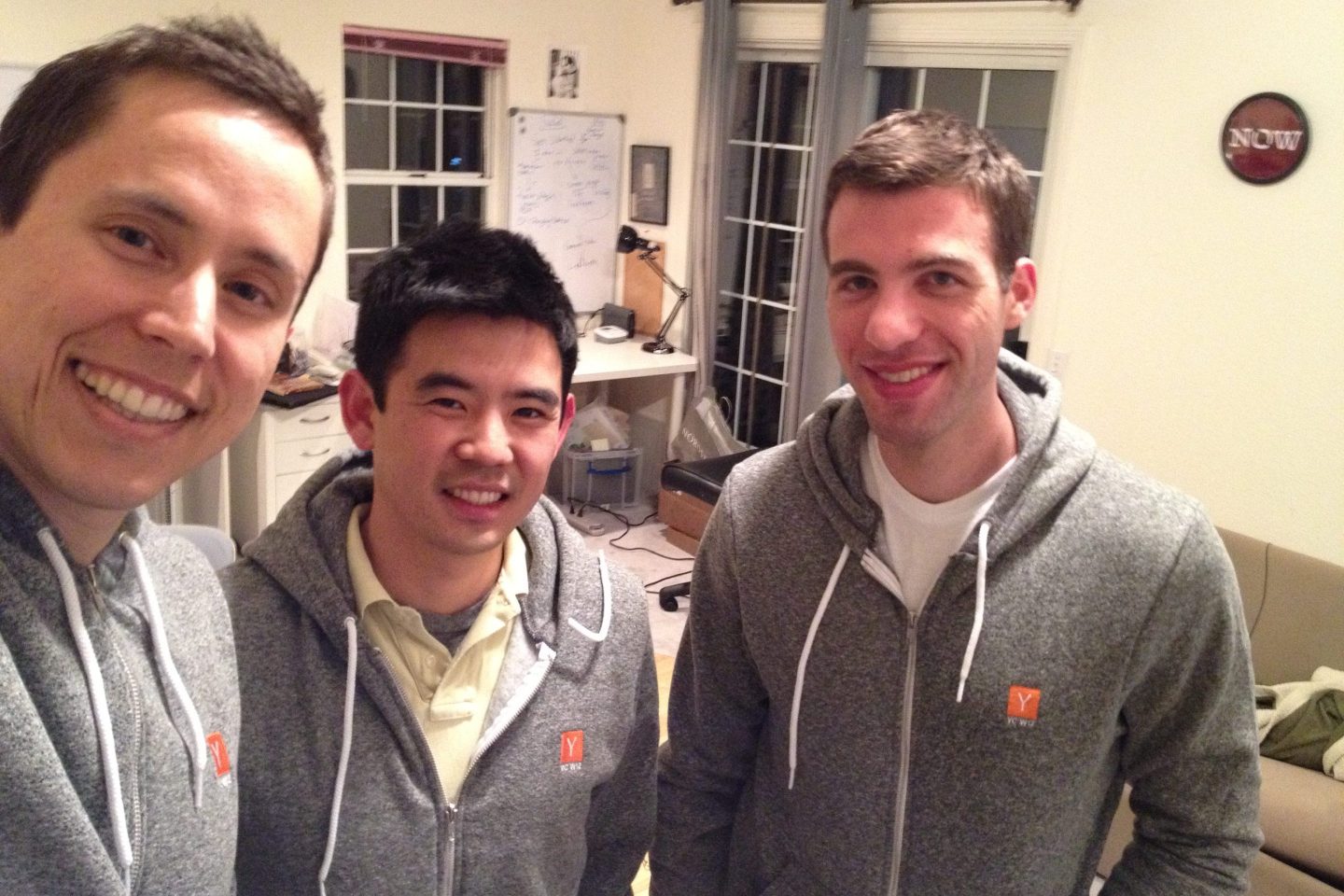
But in 2012, Eddie Kim and Tomer London, cofounders of HR software startup Gusto, were there to see Christina Stembel. The owner of Farmgirl Flowers, Stembel needed to hire her first employee and, accordingly, had to set up payroll for the first time. She’d been working since 3 a.m., but knew payroll was something she simply couldn’t bungle.
“The flower market closes at noon or 1 p.m., so I was the only person still there,” Stembel laughs. “It was me and the rats, and the rats were as big as cats. It smells like the subways of New York, with chain-link fences between stalls and single-light bulbs hanging from the ceiling. It literally looks like a murder den.”
She was, to say the least, surprised London and Kim showed. At the time, Gusto was an eight-person company. Stembel has now been a customer for more than 13 years and, even so, she’s still surprised.
“I don’t know anybody else who would come to a flower mart and set up payroll for a small business like mine with one employee,” Stembel said.
Much has changed: Today, Gusto is a $9.3 billion company that recently reached more than 500,000 customers. The company’s investors over the years have included Ontario Teachers’ Pension Plan, T. Rowe Price, General Catalyst, Fidelity Investments, and CapitalG. Now, Gusto has confirmed to Fortune that in February it surpassed $1 billion in revenue. That’s cash-in-hand, taken in over the preceding 12 months, and that’s an intentional framing, said Gusto CEO and cofounder Josh Reeves.
“Clarity is kindness,” Reeves said. “The clearer, the better. We’re much higher on ARR now, we’re accelerating growth, and we’re happy with that trajectory.” Reeves had read the story I did last year on the ARR “creativity” hitting an AI boom fever pitch, and he wanted to remove any ambiguity.
This opened the door to an entirely new conversation: It’s an enterprise software company that serves small businesses—a vital but somewhat contrarian market. The enterprise software half-myth is that a couple big contracts make your entire business, but serving small businesses demands a company closer to consumer scale. So, for Gusto, more revenue did mean more headcount, more customers—and a business that had to evolve at the intersection of consumer and enterprise pressures. How did Gusto get to $1 billion, and what milestones along the way mattered?
Read the rest of the story here, where I took a case study-angle. The revenue milestone along the way that mattered most certainly surprised me.

Term Sheet podcast… Gusto CEO and cofounder Josh Reeves is our guest on this week’s Term Sheet podcast! We talk about the revenue milestone, why he doesn’t think AI labs like OpenAI and Anthropic will touch tax compliance, and Gusto’s path to what Reeves believes is a trillion-dollar opportunity. Watch the full episode here.
See you tomorrow,
Allie Garfinkle
X: @agarfinks
Email: alexandra.garfinkle@fortune.com
Submit a deal for the Term Sheet newsletter here.
Joey Abrams curated the deals section of today’s newsletter. Subscribe here.
VENTURE CAPITAL
- Nyobolt, a Cambridge, U.K.-based fast-charging energy technology company, raised $60 million in Series C funding. Symbotic led the round and was joined by IQ Capital, Latitude, Scania Invest, and CBMM.
- Kanvas Biosciences, a Princeton, N.J.-based spatial biology company, raised $48 million in Series A funding. DCVC and Lions Capital led the round and were joined by Gates Foundation, ATHOS KG, Germin8, Ki Tua Fund, Pangaea Ventures, and others.
- Nova Intelligence, a San Francisco-based agentic AI platform designed for SAP software, raised $31.5 million in Series A funding. Chemistry led the round and was joined by Accel, Conviction, and SAP.io.
- Vori, a San Francisco-based operating system designed for grocery stores to run autonomously, raised $22 million in Series B funding. Cherryrock Capital led the round and was joined by Greylock Partners and The Factory. Read more
- Featherless.ai, a San Francisco-based platform designed for running open-source AI, raised $20 million in Series A funding. AMD Ventures and Airbus Ventures led the round and were joined by BMW i Ventures, Kickstart Ventures, Panache Ventures, and Wavemaker Ventures.
- Scout Space, a Reston, Va.-based developer of space domain awareness sensors and software, raised $18 million in Series A funding. Washington Harbour Partners led the round.
- Pit, a Stockholm, Sweden-based developer of an AI product team as a service, raised $16 million in seed funding. Andreessen Horowitz led the round and was joined by Lakestar and others.
- OpsMill, a Paris, France-based infrastructure data management company, raised $14 million in Series A funding. IRIS led the round and was joined by BGV and existing investors Serena and Partech.
- Illoca, a San Ramon, Calif.-based AI-powered design platform, raised $13 million in seed funding. Bessemer Venture Partners led the round and was joined by AIX Ventures, Root Ventures, and Alt Ventures.
- ParcelBio, a San Francisco-based developer of mRNA medicines, raised $13 million in seed funding. Breyer Capital led the round and was joined by General Catalyst, Y Combinator, Metaplanet, SurgePoint Capital, and others.
- Jesse & Ben’s, a Washington, D.C.-based brand of french fries without seed oils, raised $10 million in Series A funding. Greycroft led the round and was joined by Rich Products Ventures and existing investors.
- CodeWords, a London, U.K.-based developer of AI agents designed to autonomously build, raised $9 million in seed funding. Visionaries led the round and was joined by firstminute capital, Sequel, and Illusian.
PRIVATE EQUITY
- Colorado Premium, a portfolio company of Kainos Capital, acquired Old Hickory Smokehouse, a Lewisburg, Tenn.-based smoked and cooked foods company. Financial terms were not disclosed.
- Infinite, backed by ParkSouth Ventures, acquired Dukas Linden Public Relations, a New York City-based public relations agency. Financial terms were not disclosed.
- Mubadala acquired a minority stake in Power Factors, a Waltham, Mass.-based software, services, and hardware provider for renewable energy management. Financial terms were not disclosed.
- NextPoint Group, backed by Godspeed Capital, acquired UScontracting, an Odenton, Md.-based provider of software development solutions focused on cybersecurity, Signals Intelligence, and data analysis. Financial terms were not disclosed.
- The Entwistle Company, backed by NTC Group, acquired The Hales Group, a Clayton, N.C.-based coatings, fabrication, and logistics services provider. Financial terms were not disclosed.
FUNDS + FUNDS OF FUNDS
- 5th Century Partners, a Chicago-based private equity firm, raised $276 million for its second fund focused on founder-owned health care and business services companies.
PEOPLE
- Motive Partners, a New York City-based private equity firm, hired Umesh Subramanian as partner. Previously, he served as CTO of Citadel.