In 2012, Africa’s elephant population was facing its worst poaching crisis in decades. Well-organized hunters were slaying the animals by the hundreds and outwitting every effort by park rangers to thwart them. To help stop the carnage, Jake Wall, a Canadian researcher and geography PhD working for the organization Save the Elephants, wrote an algorithm.
Wall’s program was designed to detect when an elephant’s GPS collar had stopped moving for more than five or six hours—signaling the animal might be dead and triggering an SMS alert to local wildlife managers.
It was a pioneering first step, tracking harm on the road to preventing it. And it marked the beginning of EarthRanger, a wildlife-management platform that has expanded to a remarkable degree—and is saving animals’ lives.
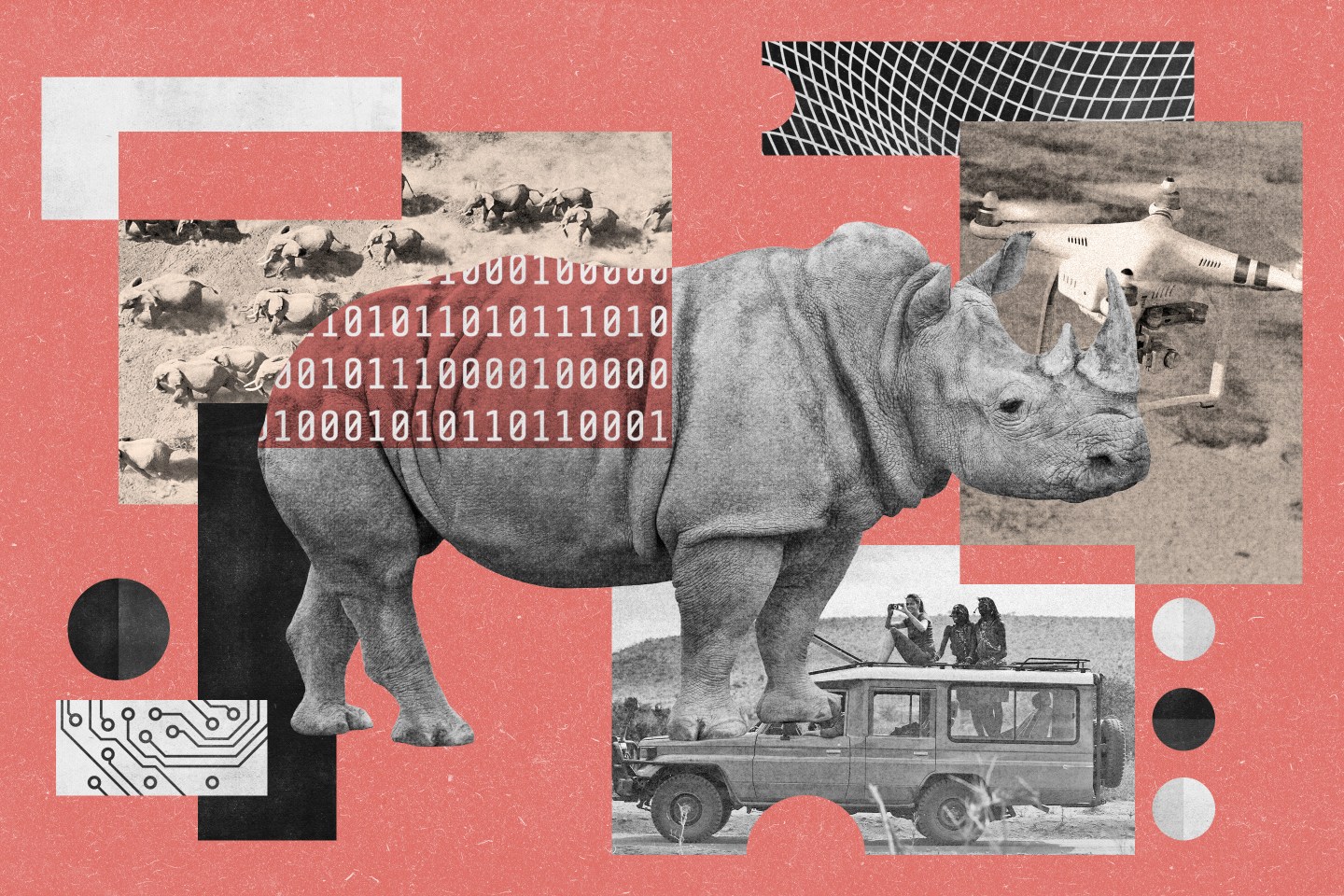
Launched in 2015, EarthRanger is now an AI-integrated data visualization and analysis software platform that gives conservationists the real-time information they need to keep animals, habitats, and communities safe. It collects, integrates, and displays data not just from GPS collars, but from camera traps, patrol reports, and remote sensors. It can provide an interactive-map view of tagged animals, rangers, and other assets like vehicles, fences, and other equipment—and sometimes poachers too—generating alerts that can mobilize field teams so they can intervene quickly if they see evidence of trouble.
Developed by Save the Elephants with Vulcan, the investment company of the late Microsoft cofounder, Paul Allen—and now part of Ai2, the nonprofit institute Allen created to build breakthrough technology—EarthRanger’s influence and impact continue to grow. Today, more than 900 sites use the platform across six continents and 90 countries, deploying it to track everything from pumas in Chile to chimpanzees in Rwandan rainforests. Mobile-ready and device-agnostic, it enables easy data sharing to bolster collaboration.
EarthRanger is also free—but its potential economic impact is vast. It has become a tool arguably indispensable to the global ecotourism market. And in Africa—where recent conservation efforts have helped halt steep declines in the numbers of elephants and rhinoceroses—its value proposition is particularly striking.
At Africa’s current annual tourism growth rate of 8%—the fastest of any world region, according to the United Nations—the continent is on track to surpass 120 million visitors by 2030. And its safari tourism industry, estimated at $20.5 billion last year, is forecast to nearly double to $39.2 billion by 2035. Indeed, EarthRanger’s users include many of the region’s most popular safari resorts.
Simply put, that industry and others like it sell access to wildlife and wild landscapes. Without thriving animal populations and vibrant ecosystems, there is no product. “The value we place on wildlife and wild spaces doesn’t equate with the economic model that exists for the price of gold or oil,” says Wall, now EarthRanger’s director of data analytics and CEO of consultancy Wildlife Dynamics. “As a species, our connection with nature is fundamental—we need to put a premium on it and maintain it.” EarthRanger is making that task a little easier.
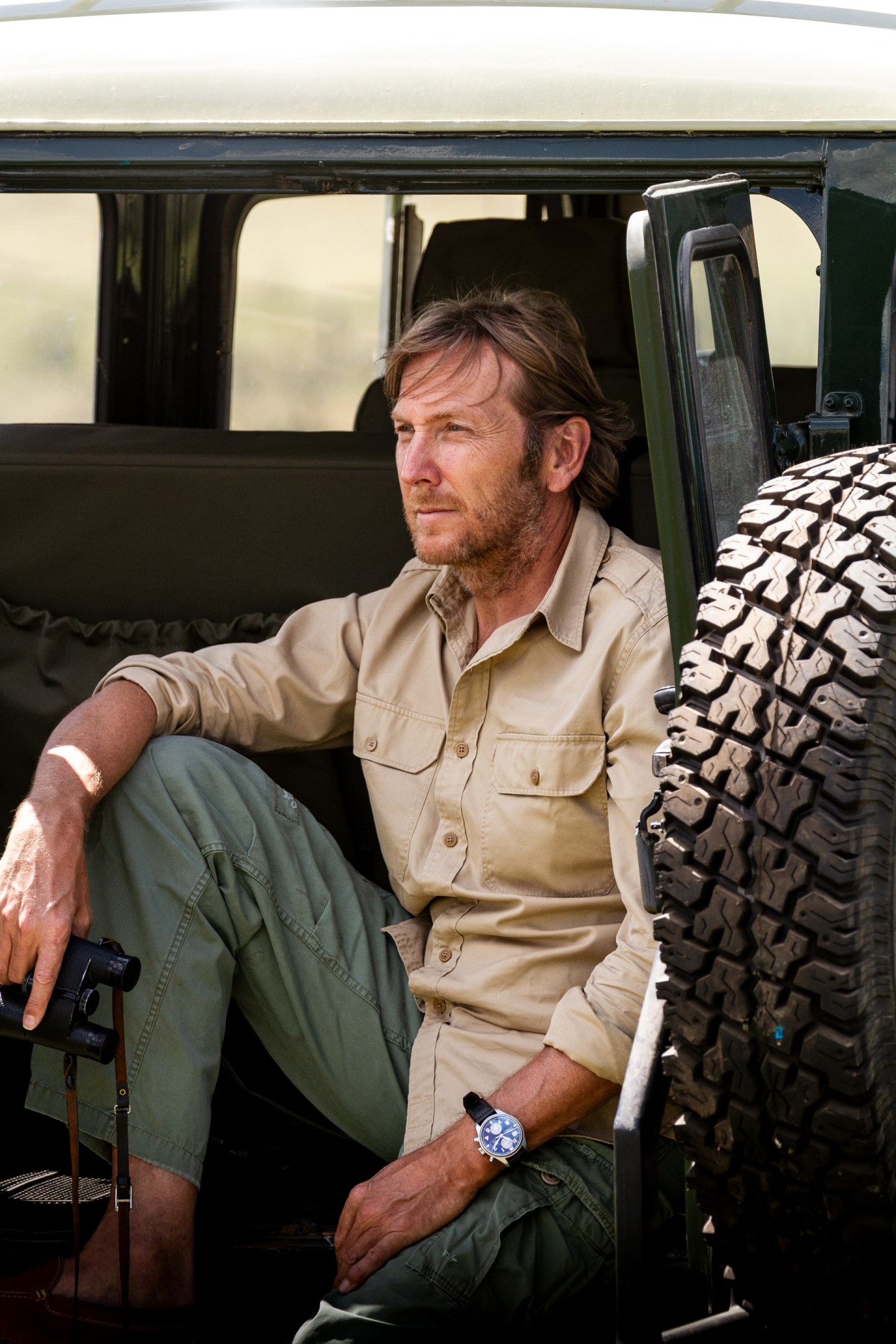
Africa’s foremost conservationists are already on board. Among them is Jochen Zeitz, the owner of Segera, an eco-retreat on Kenya’s vast Laikipia Plateau, and founder of the Long Run, a network of tourism businesses committed to sustainability and community engagement. (He’s also a former CEO of Harley-Davidson and Puma.) Zeitz acquired the 50,000-acre Segera property in 2005 and spent eight years undoing its ranching past—removing miles of fencing, reopening migratory corridors for wildlife, and coaxing the degraded land back to life. These days, boisterous elephants and journeying giraffes captivate guests, ambling in the near distance as the humans stroll the resort’s lush, bougainvillea-laden grounds.
“The overarching idea is to use technology to reduce the cost of conservation,” Zeitz says of EarthRanger. “But technology is only as effective as the infrastructure, the training, and the institutional capacity that you build around it.”
Segera adopted EarthRanger as its core wildlife monitoring platform in 2021. A 2024 upgrade equipped the platform with a long-range wide area network—a wireless network that connects battery-powered devices over long distances with minimal power usage—and with AI-powered camera management software.
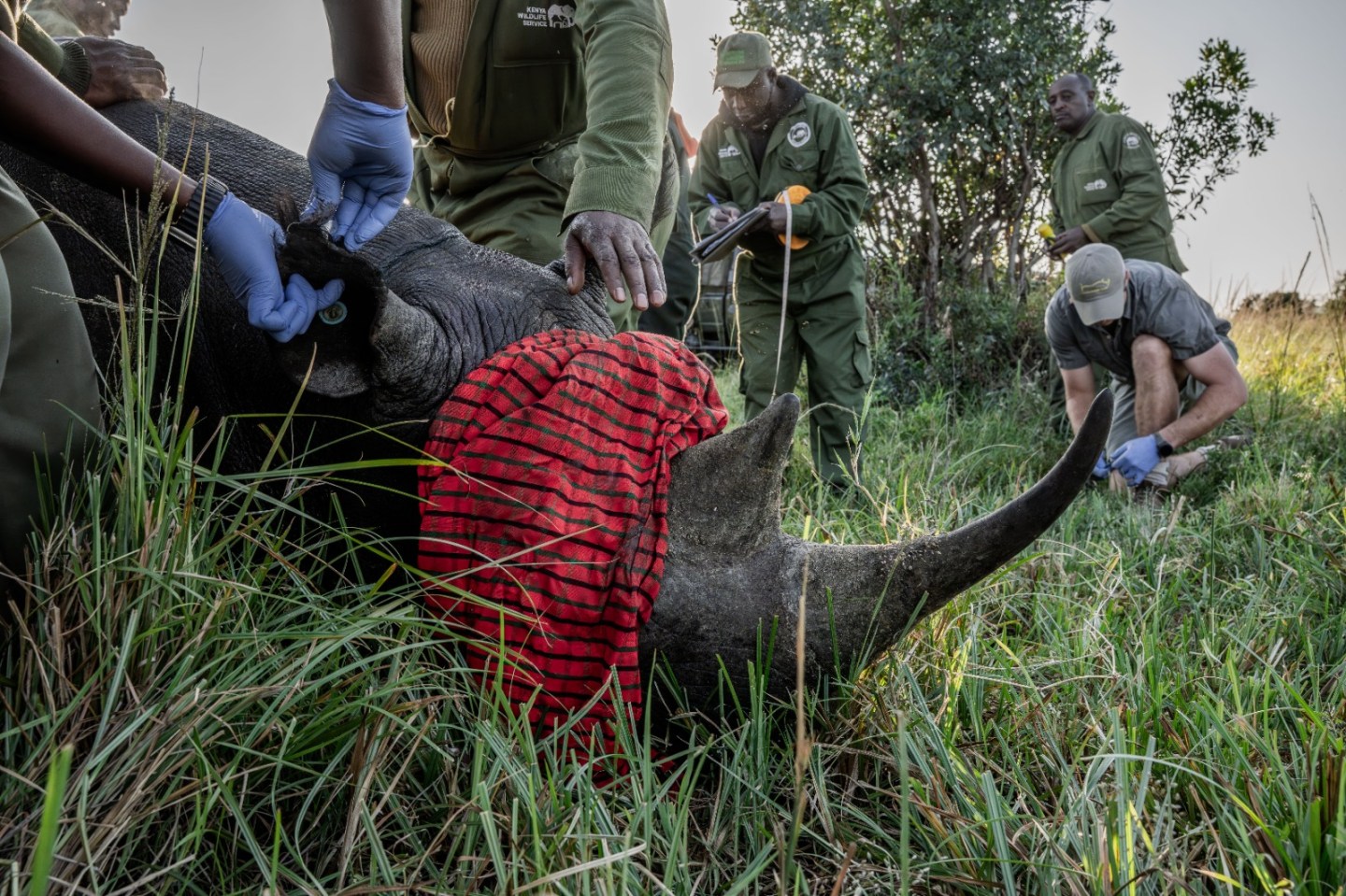
In May 2025, Zeitz and his team, in partnership with the Kenya Wildlife Service, spearheaded the translocation of 20 black rhinos to the resort. By the time Segera’s founding rhino population arrived, 28 of the resort’s rangers had received refresher training on EarthRanger’s mobile app.
Segera’s EarthRanger tools proved invaluable to monitoring the rhinos’ condition and movements as they established their territory and acclimated to their new home, Zeitz says. “To track them all by sight on foot would have been almost impossible, because they were crisscrossing the conservancy.” Now, he adds, “we’re getting data in real time from our rangers, from our rhinos’ ear tags and VHF sensor transmitters, and from AI-operated camera traps. Instead of data that used to take weeks or months to analyze, we can aggregate those field reports very quickly into a single operational picture.”
The Zeitz Foundation is exploring how to use AI to further analyze EarthRanger data and thus predict poaching risk. The longer-term objective: to shift from reactive monitoring to proactive, AI-driven threat anticipation. “We want to use these next-generation tools and real-time data to make our level of deterrence so high that poachers won’t even try,” Zeitz says. “Prevention is the best cure.”
EarthRanger’s tools and Segera’s black rhinos are playing a formative role in an even more ambitious undertaking: the Kenya Rhino Range Expansion (KRRE) initiative, launched last year. That project will create a nearly 1,200-square-mile contiguous sanctuary across private, public, and community lands—including Segera and 25 other conservancies—making the country’s rhino habitat one of the largest in the world. By 2030, the KRRE expects to grow Kenya’s black rhino population by 30%, generate $45 million in additional revenue, and add 18,000 new jobs.
“EarthRanger has revolutionized modern-day conservation, largely because of its analytic capability to inform adaptive management. When you see a problem, you can fix it,” says KRRE CEO Jamie Gaymer, whose conservation career spans more than two decades. “The fact that we’ve adopted it as a national platform is testament to the product.”
The EarthRanger platform welcomed 350 new conservation partners in 2025, and its reach will soon grow wider still. Last October, EarthRanger and SMART—a conservation-tech partnership founded in 2011 by the Wildlife Conservation Society, World Wildlife Fund, and other environmental titans—announced plans to join forces. They have since become the SMART–EarthRanger Conservation Alliance (SERCA), uniting the world’s two most widely used conservation management software platforms into a single system.
As SERCA gradually rolls out, it will add a burgeoning number of AI-driven tools to arm conservationists with crucial data in the war to safeguard the world’s most vulnerable landscapes. “This alliance makes it easier for anything we do to have impact much more quickly and effectively,” says Jes Lefcourt, director of EarthRanger at Ai2.
Along those lines, last September EarthRanger unveiled Ecoscope, an open-source data analytics and reporting platform designed for conservationists. It helps transform raw data into interactive maps and dashboards, potentially reducing analysis time from weeks to minutes, helping identify trends faster and giving more context to wildlife managers on the ground.
Ecoscope is the brainchild of Wall—the researcher who cofounded EarthRanger more than a decade ago. “Ecoscope grew organically as a library of tools that allowed us to do common conservation analyses,” he says. “It’s about understanding data being collected in the field and turning that into monitoring outputs that can be used for management and policymaking.”
The Ecoscope team has since built a system that can run analytical workflows—the set of steps required to analyze data—which can be easily shared and modified. The goal, Wall says, is to package these workflows as tools that can be used not only by academics and computer programmers, but also by operations managers at global wildlife reserves, who need these outputs to make decisions.
Wall sees EarthRanger’s next big AI-enabled opportunity in simplifying the creation of new analytical workflows and executing them at scale. As an example, he describes how AI could help rangers quickly identify poaching hotspots.
“You could narrate the desired outputs, and the AI agent would develop and execute the workflow code needed by Ecoscope,” he explains. “For example, ‘I need an Ecoscope workflow that produces a snare encounter rate, calculated as the number of snares recorded during a set of patrols divided by the distance covered by those patrols,’” he says. “Opening that potential over the next year is going to be really revolutionary.”
Ecoscope developers hope to eventually convert the analyses into fine-tuned, actionable alerts, served directly to the people who are doing the work. “Instead of users spending time on exploring data, they can focus on reacting to what it’s saying,” says Lefcourt.
“Ultimately, our goal is to enable the people on the ground by giving them tools to be more effective in their work,” he adds. “The way they know these places like the back of their hands is remarkable. But they can’t see them from a satellite, and they don’t have distributed eyes like cameras.” That’s where technology can help—and where AI can close the gap between data and successful conservation.
This article appears in the June/July 2026 issue of Fortune.
Read more about how artificial intelligence is changing the way businesses operate, compete, and succeed in Fortune’s Special Digital Issue: The AI Economy.