Good morning. On Fortune’s radar today:
- SpaceX IPO will reveal which “shareholders” got scammed.
- It might be cheaper to have your AI data center in orbit.
- Trump says he has ended the war. Iran isn’t so sure.
- Markets: Yay!
- Statistically, Mondays are the worst day of the week for stocks.
- Has the president cursed the New York Knicks?
ONE BIG THING
SpaceX IPO will finally unveil which “secondary” market buyers were scammed and which were not
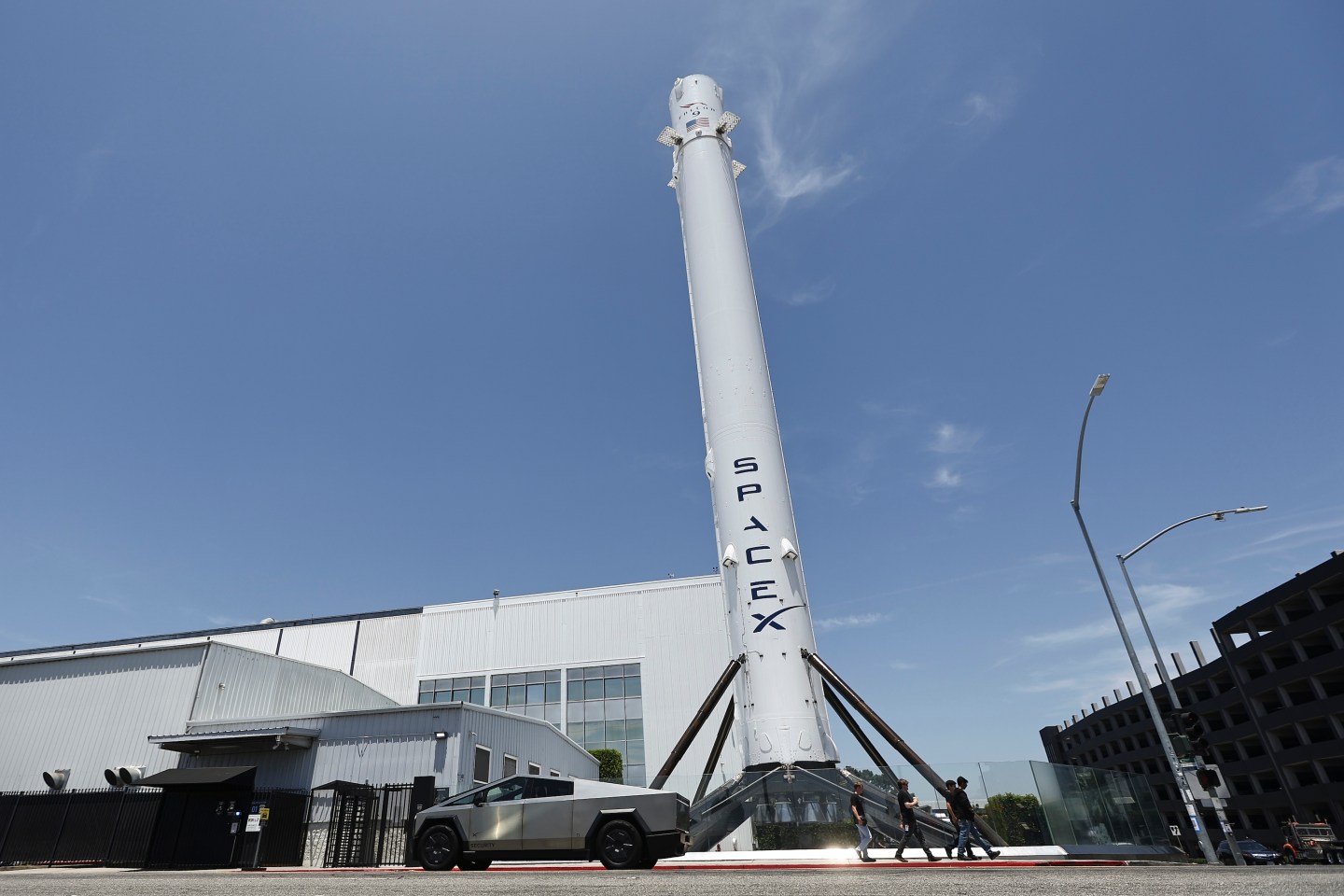
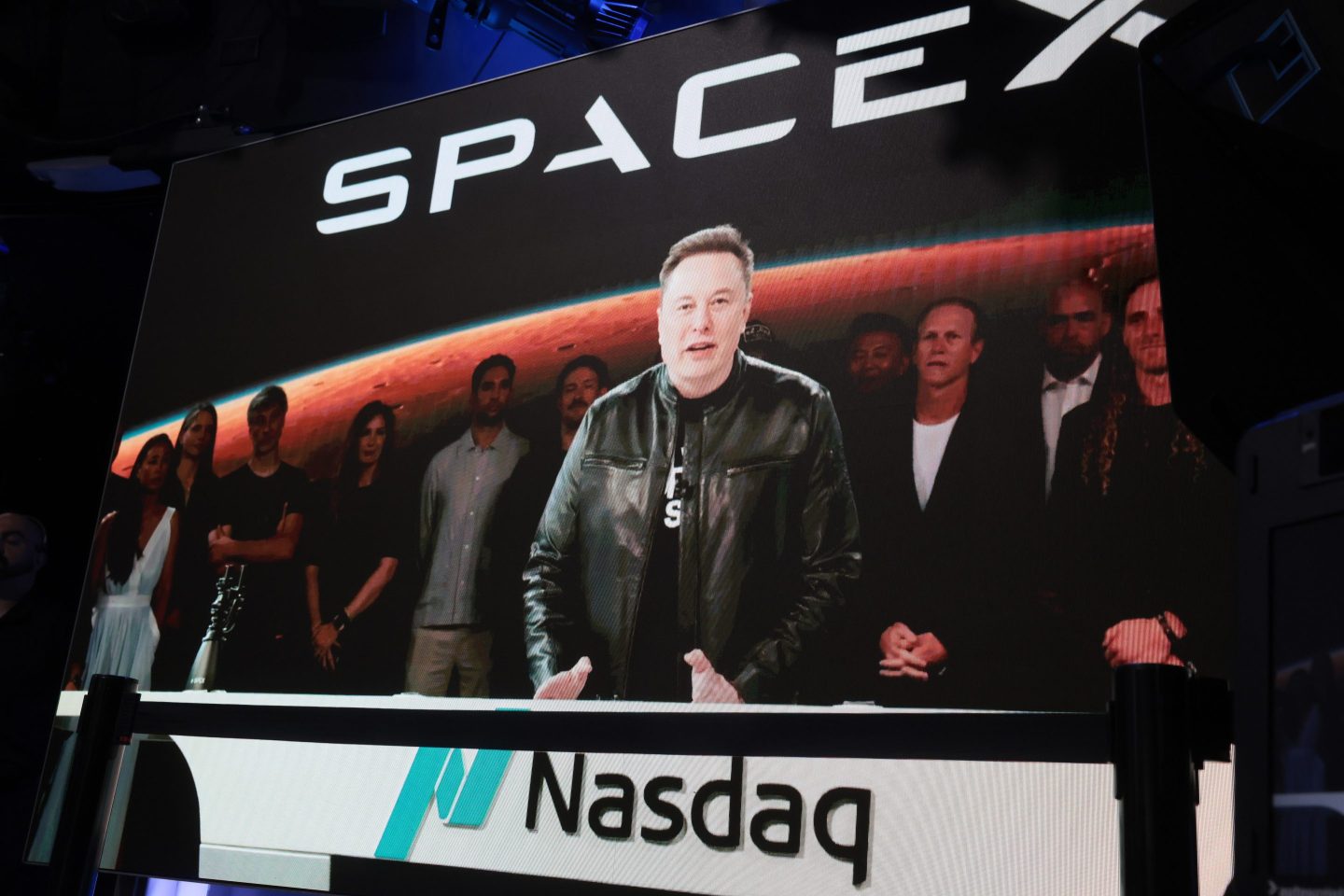
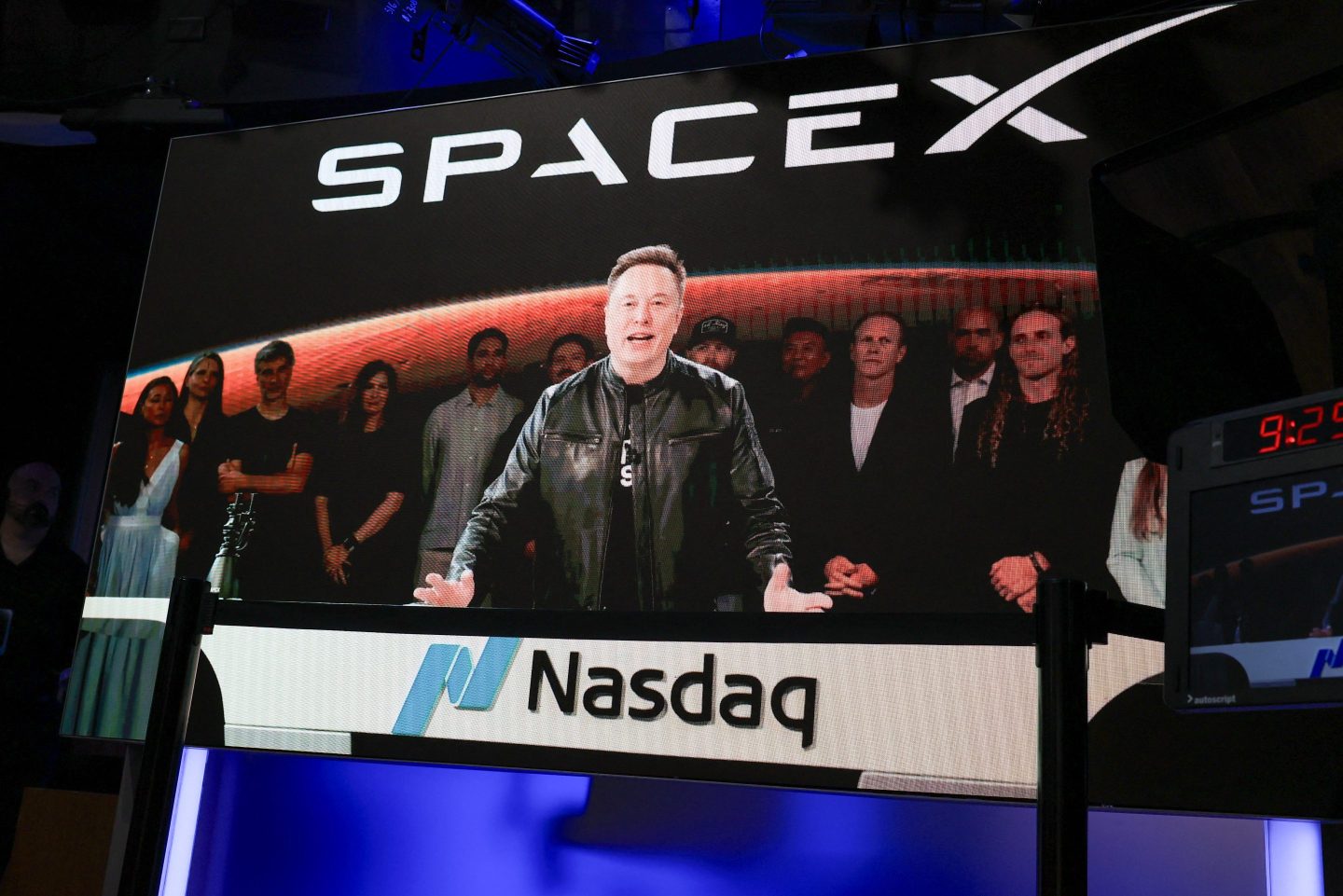
The stock market in New York will open at 9.30 a.m. local time as usual today and then, a few hours later, shares in Elon Musk’s SpaceX will begin trading publicly, starting at an offer price of $135 per share.
At a value of $1.8 trillion, the SpaceX offering will be the biggest IPO of all time.
The event will be especially nerve-wracking for one group of investors: the doctors, lawyers, dentists, entrepreneurs, and other high-net-worth individuals who privately bought shares on the shadowy “secondary” market back when SpaceX’s stock consisted only of private equity. When the insider lockup period ends, they will find out whether they hit the jackpot or were taken in by a scam, reports Fortune’s Allie Garfinkle.
Because secondary shares are traded via private contracts, often in secret, buyers are vulnerable to fraud. They won’t know if the paper contracts they bought are worth the paper they’re written on until it comes time to try to sell them. It’s not a question of whether fraud will be uncovered when SpaceX IPOs; it’s a question of how much fraud will be uncovered.
“How many people think that they have bought into SpaceX, but they’re actually just funding some dude’s coke habit in Miami? The number is not zero,” said Anduril cofounder Matt Grimm, when he spoke to Fortune a few months ago.
“In some cases, they literally are being scammed.”
The numbers
The IPO has raised $75 billion, per the FT, and the total funds raised based on the portion of the stock being offered could hit $86 billion. Demand for the shares was three times the amount on offer.
Goldman Sachs is the lead bank on the IPO and it got there by agreeing to take one of the lowest fees on record, a “gross spread” of just 0.75%, Fortune’s Shawn Tully reports. The bank will nonetheless get a chunk of the estimated $646 million in fees, and thus likely capture the largest dollar amount.
- Meet the SpaceX employees who are set to become multimillionaires thanks to its IPO: from execs to even welders - Preston Fore
- How Elon Musk sold a $1.77 trillion dream—and what other CEOs can learn from the SpaceX IPO - Diane Brady
- SpaceX Shares Indicated More Than 35% Higher in Shadow Trading - Bloomberg
- ‘China follows Musk very closely’: While SpaceX blocked Chinese investors from IPO, China’s space firms prep their own as a counterweight - Mia Osmonbekov
- While investors await the SpaceX IPO, these space stocks are already public, building an economy in Earth orbit—and beyond - Jason Ma
The economics of having your AI data centers in orbit
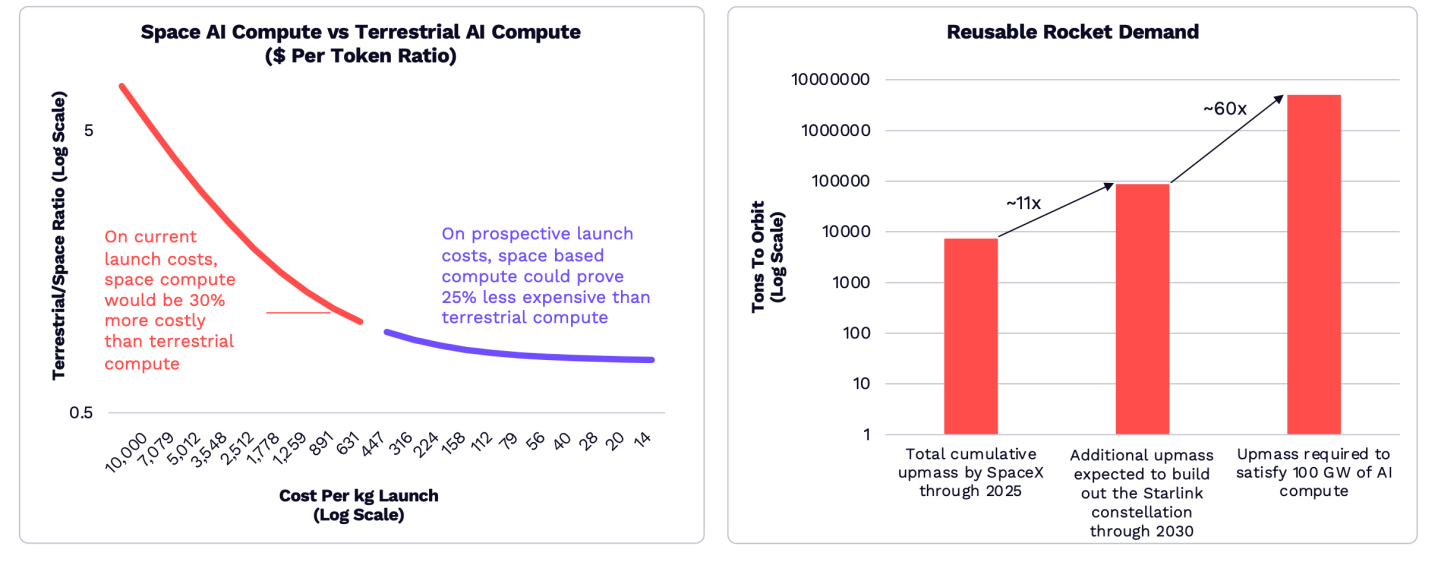
The problem with AI data centers is that they’re huge. You need places to put them. And people generally don’t want to be anywhere near them because they aren’t pretty, they use too much water and jack up your electricity bills. Elon Musk thinks he has a solution to that: use SpaceX rockets to put AI datacenters in space where they can be powered by solar cells and be a bother to no one.
But is this economically feasible? Yes, according to ARK Invest, Cathie Wood’s tech-focused investment fund. As the cost of reusable rockets declines, it will eventually fall below the cost of building data centers on Earth, according to this ARK chart:
THE MARKETS
Stocks rally globally—and oil tumbles—on hopes of peace dividend
Markets in Asia and Europe rose strongly this morning on headlines that the U.S.-Iran conflict might be coming to an end. U.S. futures were up too.
- S&P 500 futures were up 0.69% this morning. The index rose 1.75% yesterday.
- In Europe, the Stoxx 600 was up 1.83% in early trading and the U.K.’s FTSE 100 was up 1.25% before lunch.
- Asia: South Korea’s KOSPI was up 4.63%. Japan’s Nikkei 225 was up 2.81%. India’s Nifty 50 was up 1.98%. China’s CSI 300 was 1.16%.
- Brent crude was $86 per barrel this morning after being as high as $92 yesterday.
- Bitcoin rose to $63.8K.
- Bank of America told investors to ‘take profits.’ Then the Nasdaq fell 7% - Eva Roytburg
PART OF THE DEAL?
Trump claims “we ended the war with Iran today” but Iran hasn’t signed the paperwork
President Trump has claimed he has a 14-point “memorandum of understanding” to end the war with Iran, White House sources told Axios. The document calls for the Strait of Hormuz to be reopened and for sanctions on Iran to be ended as long as Iran complies with further terms. U.S. troops would be withdrawn. Talks on Iran’s nuclear ambitions would be pushed off into the future.
Trump cancelled last night’s planned airstrikes, saying, “Discussions and final points have been, in both concept and great detail, approved by all parties involved … Time and place of the signing to be announced shortly.” He told a rally in Georgia, “We ended the war with Iran today.”
Crucially, Iranian media also reported on the existence of the document. However, Iranian officials said this morning that the deal has not been finalized.
- What Wall Street is saying: Trump’s claim that we’re near the end of the conflict might have more credibility this time around. As a note from UBS said this morning, this will be the 39th time Trump has promised that the war is nearly over, but the fact that the Iranians seem to be looking at the same document is hopeful.
- Fed interest rate hikes on hold: “With oil prices coming down sharply, alongside hopes that the Strait of Hormuz will reopen, that’s seen investors price out the chance of rapid rate hikes [from the Fed] this year. Indeed, as we go to press, markets are now pricing in just a 77% chance of a Fed rate hike by December, having been fully priced in earlier this week. In fact, it’s not until the March 2027 meeting that a hike is fully priced in. So that dovish repricing helped U.S. Treasuries to surge, with the 2yr yield (-8.1bps) down to 4.06% by the close, whilst the 10yr yield (-9.1bps) fell to 4.46%,” Deutsche Bank said this morning.
- ING was skeptical. “We have been here before, where an imminent peace deal touted by the White House has failed to materialize. Let's see what Iran has to say,” Chris Turner advised clients.
THE WORLD CUP
Good for GDP, an own-goal for inflation
The economic impact of the World Cup will be “material,” according to Bank of America’s Stephen Juneau. “It could add six-tenths to U.S. GDP and four-tenths to World GDP. Indeed, we may have already seen some of the positive effects in the May jobs report. The upshot is that the tournament is another tailwind for the U.S. economy and another reason to expect inflation to be more persistent in the near-term,” he said in a note.
MORE FROM FORTUNE
The chaos at CBS News shows the limits of ‘blow it up’ leadership - Claire Zillman
Why is it so hard to get ROI from AI? Because building from first principles isn’t easy - Jeremy Kahn
Silicon Valley insiders warn U.S. defense supply chain is unprepared for modern warfare - Sebastian Herrera
Three ways that Asia’s enterprises are adopting AI—and where they are falling behind - Garrett Ilg
After backlash, Anthropic says its AI will now tell users when their request is being rejected or downgraded for national security concerns - Marco Quiroz-Gutierrez
Inflation is roaring back globally, 2022 style. The Iran war is only half the problem - Eva Roytburg
Trump says Europe freeloads on defense. Britain’s own (former) Defense Secretary just agreed - the AP
CHART OF THE DAY
Markets hate Mondays. Science agrees.
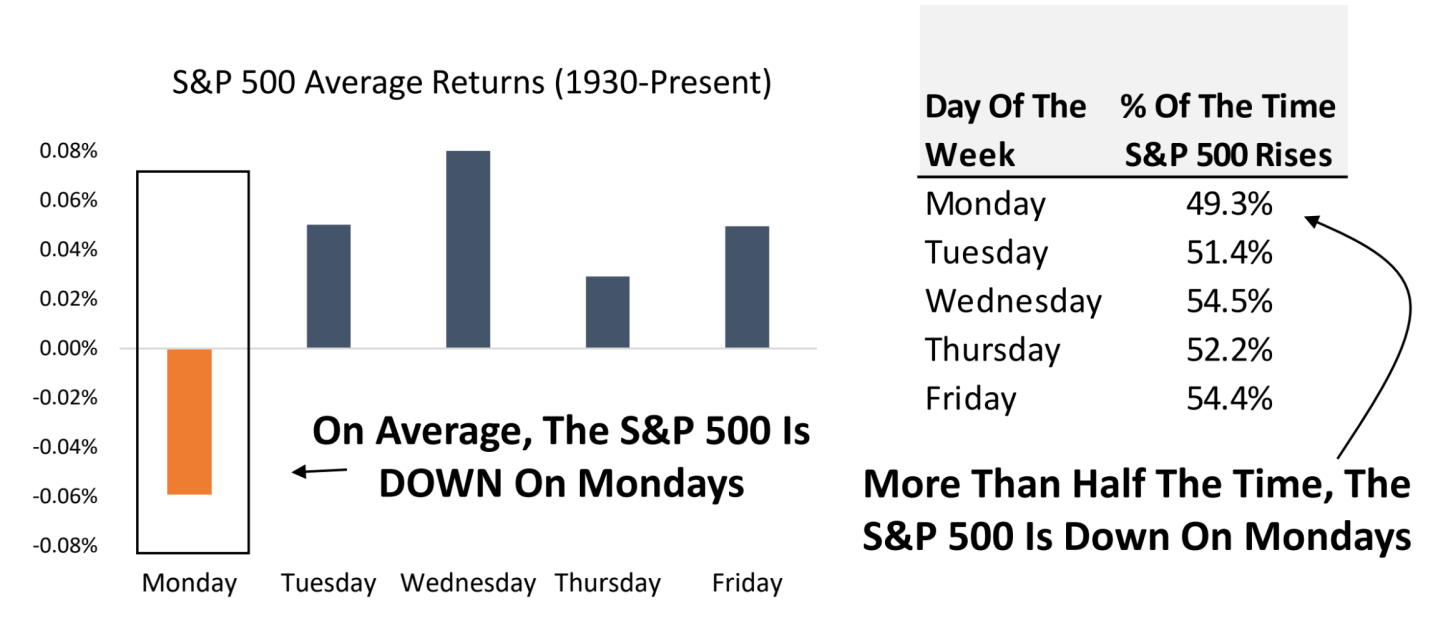
Michael Kantrowitz and his team at Piper Sandler put together an entertaining research note that examines whether there is any statistical evidence to the “seasonality” of stock market returns. It turns out, there is. On average, the S&P 500 declines on Mondays but doesn’t during the rest of the week. In addition, the “Santa rally” is real—stocks really do perform better at the end of the year. And there is still some truth to the adage “sell in May and go away," but the effect has diminished over time.
NUMBER OF THE DAY
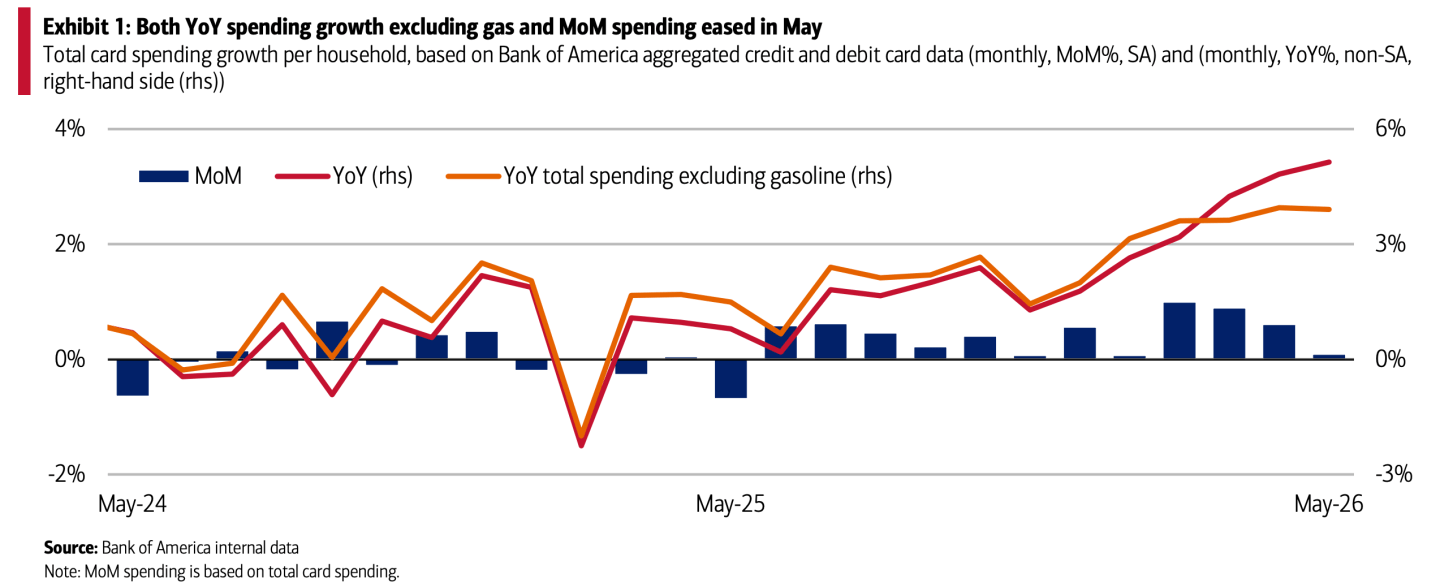
5.1%
The annual growth in U.S. consumer card spending, according to David Tinsley and his colleagues at Bank of America. That’s “the strongest growth in nearly four years, according to Bank of America internal card data. Moreover, growth isn't just gasoline-driven—underlying spending remains firm across both goods and services,” they say.
THE FRONT PAGES TODAY
The quantum computing revolution is closer than you think - FT
Meta reportedly begins dismantling $2 billion Manus deal on Beijing’s orders - CNBC
Exclusive: Disney says "Toy Story" franchise has driven $16B in revenue - Axios
Switzerland’s Radical Proposal on Immigration: Cap the Population - WSJ
The Bankrupting of a Mobile Home Billionaire - Bloomberg
U.S. Plan Is Said to Pull a Third of Fighter Jets It Provides NATO for Europe - NYT
ONE MORE THING
The curse of Trump? When the president watches a game, the home team loses
In a string of recent sporting events watched by President Trump, the home team has taken a beating, according to the AP. The New York Knicks, after two straight wins in the NBA finals against the San Antonio Spurs, lost at home 115-111 on Monday as Trump looked on from a luxury suite at Madison Square Garden.
The MLB’s Washington Nationals lost Game 5 of the World Series to the Houston Astros 7-1 when Trump was there. In November, the president was on hand as the NFL’s Washington Commanders hosted the Detroit Lions, and the visitors romped 44-22. And he was front and center at Bethpage Black when Europe topped the U.S. golf team in last fall’s Ryder Cup.
That’s going to be a problem for the U.S. soccer team if the president decides to spectate at one of their World Cup matches …