• Home
  • Latest
  • Fortune 500
  • Finance
  • Tech
  • Leadership
  • Lifestyle
  • Rankings
  • Multimedia

Trendingnow

1

26 Meta employees accuse Mark Zuckerberg of using AI to target 8,000 layoffs against workers on medical, parental or family leave

2

FedEx CEO says we are in the middle of the biggest supply chain shift he’s seen in 35 years: ‘We are the referendum’

3

He sold his last company to Palantir. Now he's betting $32 million that robots can fix construction's labor crisis

1

26 Meta employees accuse Mark Zuckerberg of using AI to target 8,000 layoffs against workers on medical, parental or family leave

2

FedEx CEO says we are in the middle of the biggest supply chain shift he’s seen in 35 years: ‘We are the referendum’

3

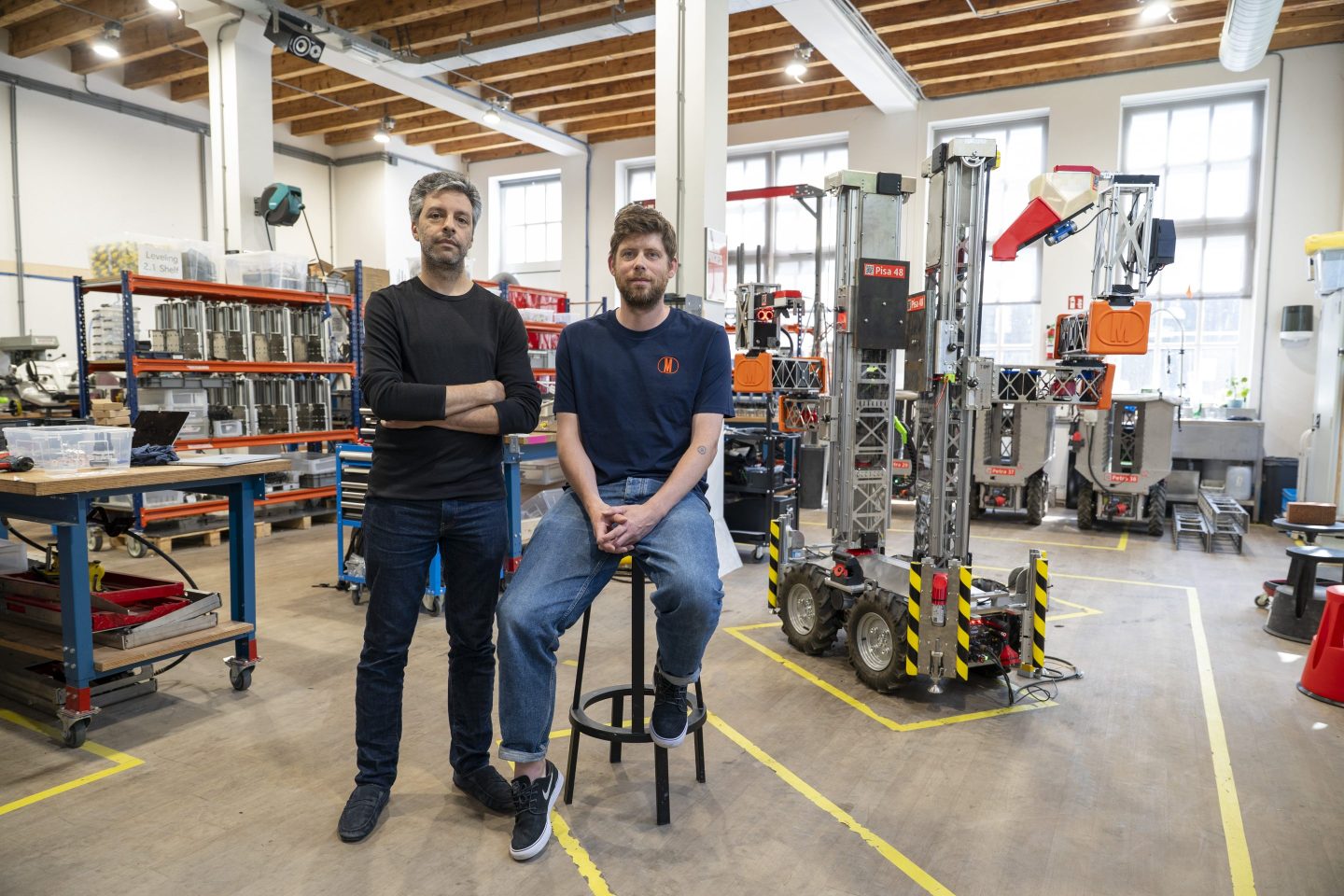
He sold his last company to Palantir. Now he's betting $32 million that robots can fix construction's labor crisis
Commentarydisruption

Genesys CEO: We can see firsthand how AI is changing — not replacing — work

By
Tony Bates
Tony Bates
Down Arrow Button Icon
By
Tony Bates
Tony Bates
Down Arrow Button Icon
July 16, 2026, 8:30 AM ET
tony
Tony Bates, chairman and CEO of Genesys.courtesy of Genesys
Add Fortune on Google for similar content.

The conversation around AI and jobs has become strangely binary. Somehow, it seems we’re headed either toward a future where AI eliminates millions of white-collar jobs or one where it unlocks unprecedented productivity and economic growth. 

Recommended Video

Some CEOs are openly discussing workforce reductions. Others are talking about hiring more because AI will help their organization move faster and tackle bigger opportunities. But the truth is, nobody really knows yet how all of this will play out. Even some of AI’s most prominent builders have managed to argue both sides of the jobs debate in recent months.

What I do know, though, is the companies seeing real results aren’t spending much time debating whether humans or AI will win. They’re focused on figuring out how work should change when both are involved.

One of the clearest places to see this shift happening is customer experience. It may not generate the same headlines as software engineering, but customer service has become an early proving ground for how humans and AI work together. Genesys powers millions of customer interactions every day, creating a constant test of where AI works, where it comes up short and evidence of how, spoiler alert, humans always will be essential.

So far, what we’re seeing looks less like replacement and more like redistribution.

Our latest global research survey found that nearly 9 in 10 customer experience leaders expect service roles to look significantly different in the next three years because of AI. Still, an overwhelming majority believe human agents will continue playing a critical role in delivering customer experience. That may sound contradictory, but it’s the ground truth.

Anyone who runs a service organization sees this firsthand. The best agents rarely spend their day answering simple questions. Instead, they’re handling exceptions, calming frustrated customers, navigating unusual circumstances and solving problems that don’t fit neatly in a script.

Today’s AI excels at resolving many routine interactions and assisting employees with repetitive work. Tomorrow’s agentic AI will be capable of handling more sophisticated customer needs as systems continue to learn, reason and act with greater autonomy. But even as those capabilities advance, human expertise won’t become less important. It will become more focused on the moments that require judgment, accountability, creativity and trust.

For decades, layers and layers of administrative work have fallen to customer service agents. These employees have spent countless hours searching for information across multiple systems, documenting conversations, navigating disconnected workflows, summarizing interactions and completing routine follow-up tasks. 

Much of that work exists because technology systems were never designed to work well together, but AI is proving remarkably effective at reducing that burden. Today, AI can instantly retrieve relevant information, summarize conversations, recommend next steps, and connect data across systems that previously operated in isolation. Increasingly, agentic AI can also orchestrate multi-step workflows and independently resolve more complex customer requests that once required human intervention. Tasks that once took several minutes now happen almost in real time.

The important question isn’t whether those tasks disappear, but what employees will do with the time AI gives them back.

When routine work shrinks, employees can spend more time creating value: resolving complex issues, building customer relationships, handling exceptions and making decisions that require context and judgment. In other words, they spend more time doing the parts of the job that customers actually care about.

Our global research also found that 76% of consumers don’t particularly care whether a problem is solved by AI or a person, as long as it’s solved quickly and completely. That’s a really practical way to think about technology.

But the same research revealed the other side of that expectation: not being able to reach a human agent is still one of the biggest frustrations that can drive a customer away from a brand. In other words, consumers aren’t choosing between AI and people. They’re expecting organizations to deliver both when each is most effective. 

Anyone who’s spent 15 minutes trapped in an automated phone prompt only to be hung up on understands why. Customers are embracing AI when it resolves their issue quickly and completely. But they also expect the ability to have a conversation with a knowledgeable person when the situation isn’t resolved and when an interaction calls for judgement, empathy and a more nuanced conversation. They want experiences that understand context, preserve information and connect them to the right resource at the right moment. And, unfortunately, many organizations still aren’t there.

A surprising number of companies continue to treat AI and human service as separate worlds. A customer starts with an AI agent, gets transferred to an employee, repeats information they’ve already provided and starts the process over again. The technology may be modern, but the experience feels broken.

That’s why the next phase of AI adoption will be defined by orchestration. The organizations getting beyond experimentation are redesigning their workflows around collaboration between AI and humans, rather than viewing one as a substitute for the other. 

As agentic AI takes on broader responsibilities, the question for leaders becomes how to design the right handoffs, safeguards and collaboration models around it. In that future, people will remain indispensable for exercising judgement, building trust, navigating ambiguity and taking accountability for outcomes. 

The goal isn’t to decide which is better. The goal is to orchestrate AI and people in ways that produce better outcomes than either could achieve alone. 

That shift requires a different management mindset than many organizations have adopted so far. Too often, AI initiatives are evaluated only with efficiency in mind. How much time is saved? How many tasks are automated? How many positions were reduced?

Those are reasonable questions, but they’re incomplete ones.

The more important questions are whether customer outcomes improved, whether employees became more effective, whether the business became more adaptable and whether new value was created because of the technology. If you’re only focused on cost reduction, you’re missing the much bigger opportunity right in front of you.

That’s why the biggest challenge of the AI era isn’t technical. Most companies eventually will have access to similar models, capabilities and tools. Competitive advantage will come from how effectively leaders redesign work, develop talent and build organizations that take advantage of those capabilities.

The companies that emerge as leaders over the next decade won’t necessarily be the ones with the largest AI budgets or the most aggressive automation. They’ll be the ones that figure out how to combine human judgment and expertise with AI’s speed and scale in ways that create better experiences for customers and better outcomes for the business.

That’s a management challenge, not a technology challenge. And it’s where the real AI race will be won.

The opinions expressed in Fortune.com commentary pieces are solely the views of their authors and do not necessarily reflect the opinions and beliefs of Fortune.


About the Author
By Tony Bates
See full bioRight Arrow Button Icon
Add Fortune on Google for similar content.

Latest in Commentary

Finance
Lorem ipsum dolor sit amet, consectetur adipiscing elit, sed do eiusmod tempor incididunt ut labore et dolore magna aliqua. Ut enim ad minim veniam
By Fortune Editors
October 20, 2025
Finance
Lorem ipsum dolor sit amet, consectetur adipiscing elit, sed do eiusmod tempor incididunt ut labore et dolore magna aliqua. Ut enim ad minim veniam
By Fortune Editors
October 20, 2025
Finance
Lorem ipsum dolor sit amet, consectetur adipiscing elit, sed do eiusmod tempor incididunt ut labore et dolore magna aliqua. Ut enim ad minim veniam
By Fortune Editors
October 20, 2025
Finance
Lorem ipsum dolor sit amet, consectetur adipiscing elit, sed do eiusmod tempor incididunt ut labore et dolore magna aliqua. Ut enim ad minim veniam
By Fortune Editors
October 20, 2025
Finance
Lorem ipsum dolor sit amet, consectetur adipiscing elit, sed do eiusmod tempor incididunt ut labore et dolore magna aliqua. Ut enim ad minim veniam
By Fortune Editors
October 20, 2025
Finance
Lorem ipsum dolor sit amet, consectetur adipiscing elit, sed do eiusmod tempor incididunt ut labore et dolore magna aliqua. Ut enim ad minim veniam
By Fortune Editors
October 20, 2025

Most Popular

Finance
Lorem ipsum dolor sit amet, consectetur adipiscing elit, sed do eiusmod tempor incididunt ut labore et dolore magna aliqua. Ut enim ad minim veniam
By Fortune Editors
October 20, 2025
Finance
Lorem ipsum dolor sit amet, consectetur adipiscing elit, sed do eiusmod tempor incididunt ut labore et dolore magna aliqua. Ut enim ad minim veniam
By Fortune Editors
October 20, 2025
Finance
Lorem ipsum dolor sit amet, consectetur adipiscing elit, sed do eiusmod tempor incididunt ut labore et dolore magna aliqua. Ut enim ad minim veniam
By Fortune Editors
October 20, 2025
Finance
Lorem ipsum dolor sit amet, consectetur adipiscing elit, sed do eiusmod tempor incididunt ut labore et dolore magna aliqua. Ut enim ad minim veniam
By Fortune Editors
October 20, 2025
Finance
Lorem ipsum dolor sit amet, consectetur adipiscing elit, sed do eiusmod tempor incididunt ut labore et dolore magna aliqua. Ut enim ad minim veniam
By Fortune Editors
October 20, 2025
Finance
Lorem ipsum dolor sit amet, consectetur adipiscing elit, sed do eiusmod tempor incididunt ut labore et dolore magna aliqua. Ut enim ad minim veniam
By Fortune Editors
October 20, 2025
Fortune Secondary Logo
Rankings
  • 100 Best Companies
  • Fortune 500
  • Global 500
  • Fortune 500 Europe
  • Most Powerful Women
  • World's Most Admired Companies
  • See All Rankings
  • Lists Calendar
Sections
  • Finance
  • Fortune Crypto
  • Features
  • Leadership
  • Health
  • Commentary
  • Success
  • Retail
  • Mpw
  • Tech
  • Lifestyle
  • CEO Initiative
  • Asia
  • Politics
  • Conferences
  • Europe
  • Newsletters
  • Personal Finance
  • Environment
  • Magazine
  • Education
Customer Support
  • Frequently Asked Questions
  • Customer Service Portal
  • Privacy Policy
  • Terms Of Use
  • Single Issues For Purchase
  • International Print
Commercial Services
  • Advertising
  • Fortune Brand Studio
  • Fortune Analytics
  • Fortune Conferences
  • Business Development
  • Group Subscriptions
About Us
  • About Us
  • Press Center
  • Work At Fortune
  • Terms And Conditions
  • Site Map
  • About Us
  • Press Center
  • Work At Fortune
  • Terms And Conditions
  • Site Map
  • Facebook icon
  • Twitter icon
  • LinkedIn icon
  • Instagram icon
  • Pinterest icon

Latest in Commentary

tony
Commentarydisruption
Genesys CEO: We can see firsthand how AI is changing — not replacing — work
By Tony BatesJuly 16, 2026
2 hours ago
d
CommentaryParenting
New School economist: Trump Accounts will widen America’s wealth gaps
By Darrick HamiltonJuly 16, 2026
4 hours ago
cape
CommentaryWorld Cup
The legend of Cape Verde: How an island of half a million built the best team at the World Cup
By André MartinJuly 16, 2026
5 hours ago
sb
Commentarynational debt
The national debt is over 100% of GDP and most of Congress is ignoring wishes to rein it in. It’s time to amend the Constitution
By Steve H. Hanke and David M. WalkerJuly 15, 2026
24 hours ago
Is your AI really working? Why productivity isn’t the same as progress
Future of WorkBrainstorm Tech
Is your AI really working? Why productivity isn’t the same as progress
By Jamie GarverickJuly 15, 2026
1 day ago
r
CommentaryFDA
Trust in the FDA is collapsing. It’s time to get really transparent about our food and our drugs
By Jeffrey Sonnenfeld, Megan Ranney, Sten Vermund, Patricia Greenstein and Steven TianJuly 14, 2026
2 days ago

Most Popular

26 Meta employees accuse Mark Zuckerberg of using AI to target 8,000 layoffs against workers on medical, parental or family leave
Law
26 Meta employees accuse Mark Zuckerberg of using AI to target 8,000 layoffs against workers on medical, parental or family leave
By Barbara Ortutay, Alexandra Olson and The Associated PressJuly 15, 2026
1 day ago
FedEx CEO says we are in the middle of the biggest supply chain shift he’s seen in 35 years: ‘We are the referendum’
C-Suite
FedEx CEO says we are in the middle of the biggest supply chain shift he’s seen in 35 years: ‘We are the referendum’
By Fortune EditorsJuly 15, 2026
23 hours ago
He sold his last company to Palantir. Now he's betting $32 million that robots can fix construction's labor crisis
Innovation
He sold his last company to Palantir. Now he's betting $32 million that robots can fix construction's labor crisis
By Lily Mae LazarusJuly 15, 2026
1 day ago
Jamie Dimon understands why people are anti-rich: 'We have, in fact, left the lower-income folks behind' and 'that's kind of annoying'
Economy
Jamie Dimon understands why people are anti-rich: 'We have, in fact, left the lower-income folks behind' and 'that's kind of annoying'
By Eleanor PringleJuly 15, 2026
1 day ago
MacKenzie Scott, Melinda French Gates, and Lauren Sánchez Bezos are rewriting the rules of billionaire giving—one quietly, one strategically, one very publicly
Newsletters
MacKenzie Scott, Melinda French Gates, and Lauren Sánchez Bezos are rewriting the rules of billionaire giving—one quietly, one strategically, one very publicly
By Sydney LakeJuly 14, 2026
2 days ago
After donating $48 billion to the Gates Foundation, Warren Buffett is quietly ending one of the biggest philanthropic relationships in history
North America
After donating $48 billion to the Gates Foundation, Warren Buffett is quietly ending one of the biggest philanthropic relationships in history
By Marco Quiroz-GutierrezJuly 14, 2026
2 days ago

© 2026 Fortune Media IP Limited. All Rights Reserved. Use of this site constitutes acceptance of our Terms of Use and Privacy Policy | CA Notice at Collection and Privacy Notice | Do Not Sell/Share My Personal Information
FORTUNE is a trademark of Fortune Media IP Limited, registered in the U.S. and other countries. FORTUNE may receive compensation for some links to products and services on this website. Offers may be subject to change without notice.